I just finished reading Anne Lamott’s new book, Help Thanks Wow: Three Essential Prayers. Anne Lamott is one of my favorite writers, one of the best teachers, someone I adore because she shows up, as she is, and tells the truth. Honestly, I don’t always like what she has to say. It can make me uncomfortable and sad, but I know it’s the truth. She doesn’t try to make it pretty, she’s not attempting to craft a fussy literary moment, she’s not showing off, but simply is telling you how it is. This is the kind of writer, the kind of person I aspire to be.
In the section about “Thanks,” she says:
I admit, sometimes this position of gratitude can be a bit of a stretch. So many bad things happen in each of our lives. Who knew? When my son, Sam, was seven and discovered that he and I would probably not die at exactly the same moment, he began to weep and said, “If I had known that, I wouldn’t have agreed to be born.” This one truth, that the few people you adore will die, is plenty difficult to absorb…We are hurt beyond any reasonable chance of healing. We are haunted by our failures and mortality. And yet the world keeps on spinning, and in our grief, rage, and fear a few people keep on loving us and showing up. It’s all motion and stasis, change and stagnation. Awful stuff happens and beautiful stuff happens, and it’s all part the big picture.
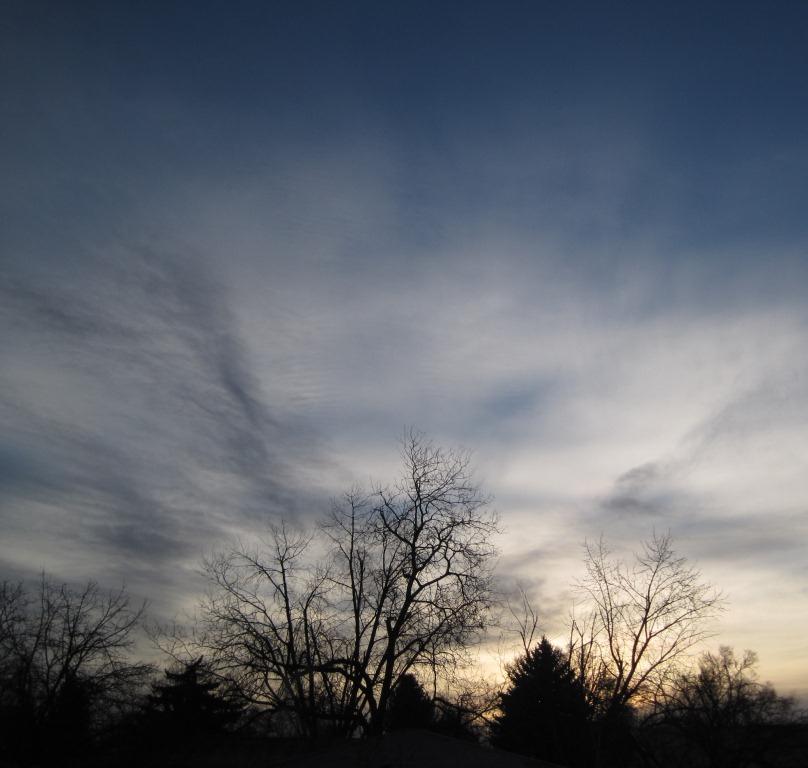
In the face of everything, we slowly come through. We manage to make new constructs and baskets to hold what remains, and what has newly appeared. We come to know–to reconnect with–something rich and okay about ourselves. And at some point, we cast our eyes to the beautiful skies, above all the crap we’re wallowing in, and we whisper, “Thank you.”
1. This quote from Tenzin Gyatso, 14th Dalai Lama, “The purpose of all major religious traditions is not to construct big temples on the outside, but to create temples of goodness and compassion inside, in our hearts.”
2. Street Compliments from Soul Pancake.
3. This quote from the Dalai Lama, “These days, in our materialistic culture, many people are led to believe that money is the ultimate source of happiness. Consequently, when they don’t have enough of it they feel let down. Therefore, it is important to let people know that they have the source of contentment and happiness within themselves, and that it is related to nurturing our natural inner values.”
4. Harlem Shake Karme Choling edition. I only learned this week what the Harlem Shake is, and thought this was an especially funny version.
5. Please Mind the Gap on Scoutie Girl, which says “How is it that we suddenly don’t know how to just do nothing?All those empty spaces seem like such an inconvenience. A total waste of time when I could be being productive.” Exactly. And this, “But the spaces in between can provide some of life’s most meaningful moments,” and “We need space to breathe, to ponder, to take in the world around us, to rest, to be inspired.”
6. I am in love with Kid President, and Soul Pancake. Here, Kid President Interviews Rainn Wilson.
8. Tara Brach shared this poem on Facebook, and I just love it.
Spacious
Dear you,
you who always have
so many things to do
so many places to be
your mind spinning like
fan blades at high speed
each moment always a blur
because you’re never still
I know you’re tired
I also know it’s not your fault
The constant brain-buzz is like
a swarm of bees threatening
to sting if you close your eyes
You’ve forgotten something again
You need to prepare for that or else
You should have done that differently
What if you closed your eyes?
Would the world fall
apart without you?
Or would your mind
become the open sky
flock of thoughts
flying across the sunrise
as you just watched and smiled
~Kaveri Patel
9. This quote from Chögyam Trungpa, “Before we produce anything at all, we have to have a sense of free and open space.”
12. Melt Your Emotional Blocks: Emotional Freedom Technique on Kris Carr’s blog. As with all good things, this might be crazy, might be magic. I tried it a few times this past week when I was feeling overwhelmed, and it really helped calm me down.
What advice do you have for beginning writers? 1. Write a lot. 2. Don’t be in a hurry to publish. 3. Find the work that moves you the most deeply and read it over and over again. I’ve had many great teachers, but the most valuable lessons I learned were from writers on the page. 4. Be brave. Write what’s true for you. Write what you think. Write about what confuses you and compels you. Write about the crazy, hard, and beautiful. Write what scares you. Write what makes you laugh and write what makes you weep. Writing is risk and revelation. There’s no need to show up at the party if you’re only going to stand around with your hands in your pockets and stare at the drapes.
I’d like to take a moment to remind you of the pointlessness of guilt and shame, especially in regard to your spiritual practice. We are all going to miss days, weeks, or years. We are all going to become confused at various points along the path. None of this means that you are bad or stupid. It’s so strange to have to say that, but believe me, I have to say it to myself about 1 zillion times per day. For some reason, we are prone to think the worst of ourselves. But neither guilt nor shame have ever led to breakthroughs in wisdom or compassion, at least not for me.
Working in 90-minute intervals turns out to be a prescription for maximizing productivity. Professor K. Anders Ericsson and his colleagues at Florida State University have studied elite performers, including musicians, athletes, actors and chess players. In each of these fields, Dr. Ericsson found that the best performers typically practice in uninterrupted sessions that last no more than 90 minutes. They begin in the morning, take a break between sessions, and rarely work for more than four and a half hours in any given day.” And, “Our basic idea is that the energy employees bring to their jobs is far more important in terms of the value of their work than is the number of hours they work. By managing energy more skillfully, it’s possible to get more done, in less time, more sustainably.
Also from Susannah’s list, The Empathic Civilisation.
Dogs don’t know about beginnings, and they don’t speculate on matters that occurred before their time. Dogs also don’t know — or at least don’t accept — the concept of death. With no concept of beginnings or endings dogs probably don’t know that for people having a dog as a life companion provides a streak of light between two eternities of darkness. ~Stanley Coren
You spent the first half of your life becoming somebody. Now you can work on becoming nobody, which is really somebody. For when you become nobody there is no tension, no pretense, no one trying to be anyone or anything. The natural state of mind shines through unobstructed-and the natural state of mind is pure love.
An open heart can leave us feeling unstable. We balance this by cultivating a steady mind. Meditation trains our mind to hold steady under the onslaught of disturbing images, thoughts and feelings, helping us maintain a sense of center when the world spins out of control.




 Open Space Practice, (AKA: A Thousand Shades of Gray)