Monthly Archives: April 2013

Full Pink Moon

4-Full-Pink-Moon

Today is a full moon, the Full Pink Moon to be specific. Every month on the full moon, Jamie Ridler hosts a full moon dreamboard practice. There’s typically one theme to contemplate, a single question to consider, and I make a dreamboard that is a visual and textual collage of my heart’s answer, with a poem of sorts as a way to further interpret it. This particular full moon there are more questions than just that one, sent by the Universe for my consideration.

Always there is Rachel Cole‘s question, my mantra, the question underneath every other question.

whatareyouhungryfor

From Julia Fehrenbacher on Judy Clement Wall’s blog: “What has stood in the way of you being your most empowered, loving self, and what are you currently doing to be more of who you really are?”

From Jamie’s Wishcasting Wednesday: “Where do you wish for healing?”

From Jamie’s Full Moon Dreamboard post: “What are you dreaming under this Full Pink Moon? The name represents the pink flowers that so lavishly bloom in the spring. What an invitation to let yourself luxuriate in your dreams, embracing them passionately, sharing them magnificently and enjoying each precious bloom. Let’s share our dreams and make beautiful magic together under the Full Pink Moon!”

Full Pink Moon asks: “What dreams is it time to tend?”
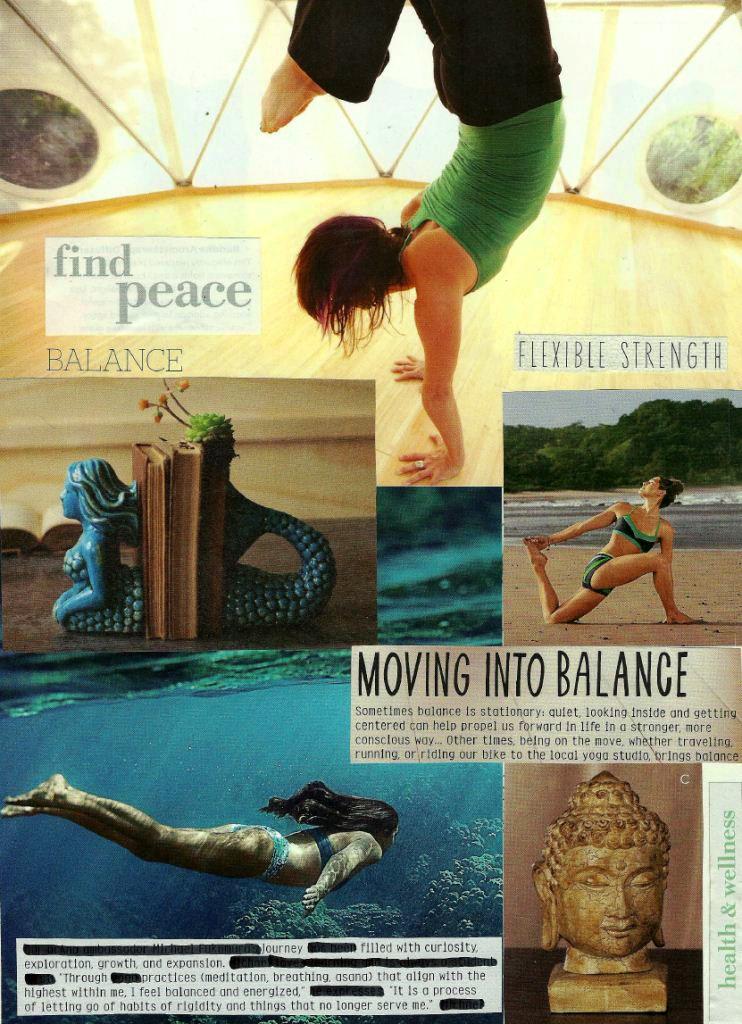
fullpinkmoon13

All of these questions circle around a single answer: The way to health and wellness, the path to peace and strength, the key to freedom is radical acceptance. As Tara Brach defines it, “the willingness to experience ourselves and our lives as it is,” and “clearly recognizing what is happening inside us, and regarding what we see with an open, kind and loving heart.”

I have to fall in love with myself. I have to see myself as I am, a precious and brilliant and passionate mess. I have to honor my truth worth.

Perhaps the biggest tragedy of our lives is that freedom is possible, yet we can pass our years trapped in the same old patterns…We may want to love other people without holding back, to feel authentic, to breathe in the beauty around us, to dance and sing. Yet each day we listen to inner voices that keep our life small. ~Tara Brach

Like a mermaid, I have to dive deep, swim in the dark water. As the Hopi elders said in their prophecy,

There is a river flowing now very fast. It is so great and swift that there are those who will be afraid. They will try to hold on to the shore. They will feel they are being torn apart and will suffer greatly. Know the river has its destination. The elders say we must let go of the shore, push off into the middle of the river, keep our eyes open, and our heads above the water.

As Pema Chödrön suggests, I have to make friends with myself, be honest and kind and gentle.

Be fully present.
Feel your heart.
And engage the next moment without an agenda.

Find peace.
Flexible strength,
health and wellness.
Arching, reaching, stretching, opening.
Light, water, ground, and space.
Breath, muscle, bone, and blood.
Balance.

Sometimes balance is stillness, quiet.
Other times moving brings balance.
Balance is never a fixed point,
the center of gravity is always shifting.

Journey
filled with curiosity, exploration, growth, and expansion
through practices
(meditation, breathing, asana
writing, love, dog)
that align with the highest within me.
In this way, I feel balanced and energized.

It is a process of letting go
of habits of rigidity
and things that no longer serve me.

Relax.
Let go.
Surrender to what is, as it is, as I am.
Move into balance.
Effort matching my ease.

Living is a form of not being sure, not knowing what next or how. The moment you know how, you begin to die a little. The artist never entirely knows. We guess. We may be wrong, but we take leap after leap in the dark. ~Agnes de Mille


Three Truths and One Wish (on a Wednesday)

I am a Practitioner in Susan Piver’s Open Heart Project, and we are currently studying the 59 lojong slogans. Lojong means mind training and these slogans “offer pithy, powerful reminders on how to awaken our hearts in the midst of day-to-day life, under any circumstances,” and help us to see that “we can use everything we encounter in our lives–pleasant or painful–to awaken genuine, uncontrived compassion,” (Pema Chödrön, Always Maintain a Joyful Mind).

As often happens on a Tuesday, I woke up yesterday knowing it was a Three Truths and One Wish post day but having no idea what I might write about. I was also extra tired, having been so worried about Dexter, needing to keep such a close eye on him. That worry and lack of sleep also brought back a little bit of the sick that kept me home from work last week. I didn’t feel great, had very little energy or motivation, and ended up not writing anything at all.

But if I had posted, I knew what I’d write. Even though I woke up not knowing, the email came from Susan with our lojong slogan for the week. It was a set of threes, an obvious sign from the universe that here was something I could write about.

Lojong slogan: Three objects, three poisons, three seeds of virtue.

1. Truth: three objects. These give the next three, the poisons, something to attach to, a place to focus their attention and energy. The three objects are what trigger the three poisons, what provoke us. These objects are everything we crave, fear, or ignore. They are all the stuff we try to get, reject, or don’t pay any attention to. They can be people, events, experiences, or things. The three objects are what give rise to the three poisons.

Pema Chödrön describes them as “friends, enemies, and neutrals.” An Everyday Buddhadharma post on Elephant Journal explains this further by suggesting that “Whether we are aware of it or not, we tend to categorize people into friends, enemies, or neutrals and we react with corresponding emotions to these categories as if they were fixed and unchanging.” In her commentary on this slogan, Acharya Judy Lief says “One way of looking at this slogan is that it is about the power of labels. It is about the way we categorize our world and what happens as a result.”

1. Truth: three poisons. These are passion (grasping or attachment), aggression (passive or active), and ignorance (dullness, delusion, or willful confusion). I can still remember hearing about the three poisons for the first time, being completely gobsmacked by the power and clarity of that view, this way of understanding how we generate suffering.

The three poisons are always trapping you in one way or another, imprisoning you and making your world really small. When you feel craving, you could be sitting on the edge of the Grand Canyon, but all you can see is this piece of chocolate cake you’re craving. With aversion, you’re sitting on the edge of the Grand Canyon, and all you can hear is the angry words you said to someone ten years ago. With ignorance, you’re sitting on the edge of the Grand Canyon with a paper bag over your head. Each of the three poisons has the power to capture you so completely that you don’t even perceive what’s in front of you. ~Pema Chödrön, Start Where You Are: A Guide to Compassionate Living

3. Truth: three seeds of virtue. These are freedom from passion, aggression, and ignorance. It is the way we can interrupt our habitual response, disrupt our normal patterns, it’s how we can turn our regular way of being into one that manifests compassion and wisdom. We see the truth of our typical behavior, become aware and take responsibility, and plant the seeds of virtue.

Pema Pema Chödrön explains this part of the slogan in her book Start Where You Are: A Guide to Compassionate Living and does so beautifully, with complete clarity.

In terms of “Three objects, three poisons, and three seeds of virtue,” when these poisons arise, the instruction is to drop the story line, which means-instead of acting out or repressing-use the situation as an opportunity to feel your heart, to feel the wound. Use it as an opportunity to touch that soft spot. Underneath all that craving or aversion or jealousy or feeling wretched about yourself, underneath all that hopelessness and despair and depression, there’s something extremely soft, which is called bodhichitta.

When these things arise, train gradually and very gently without making it into a big deal. Begin to get the hang of feeling what’s underneath the story line. Feel the wounded heart that’s underneath the addiction, self-loathing, or anger: If someone comes along and shoots an arrow into your heart, it’s fruitless to stand there and yell at the person. It would be much better to turn your attention to the fact that there’s an arrow in your heart and to relate to that wound.

When we do that, the three poisons become three seeds of how to make friends with ourselves. They give us the chance to work on patience and kindness, the chance not to give up on ourselves and not to act out or repress. They give us the chance to change our habits completely. This is what helps both ourselves and others. This is instruction on how to turn unwanted circumstances into the path of enlightenment. By following it, we can transform all that messy stuff that we usually push away into the path of awakening: reconnecting with our soft heart, our clarity, and our ability to open further.

One Wish: That each of us develops an awareness of the ways in which we are generating suffering. That with wisdom and compassion and great gentleness we start to interrupt this behavior, to change the habitual patterns that lead to pain and poison. That we ease suffering, in ourselves and the world, and begin planting seeds of virtue instead.

May all beings be happy.
May all beings be well.
May all beings be safe.
May all beings be free from suffering.