

I first found Kat McNally’s blog when she hosted Blogtoberfest last year. I immediately liked her, and the more I read of her work, of her life, her joy and her struggles, the more that affection grew — the more we connected, the more I adored her. She has many of the same doubts I do, puts forth the same kind of effort, is utterly amazing but doesn’t always see it for herself.
Kat is a mirror for me — I know for certain how completely wonderful she is, so when she questions that, when her trust in who she is falters, I think to myself “if Kat can be such a wonder, and still struggle, not always be sure, and yet I can see her so clearly, love her so much, maybe I might be able to also learn to do the same for myself.” In loving her, knowing her worth, seeing through her confusion, I am able to be more gentle, more kind with myself.
I’ve told Kat many times that someday, someday I will sit across the table from her at a coffee shop and we’ll talk about everything and nothing, make each other laugh, maybe even cry a little, and I will be able to adore her in person — I just know it, (she lives in Australia, so it will take a little extra effort, I admit). For now, I am happy to share her perspective on self-compassion with you, (plus some extra special, exciting news).
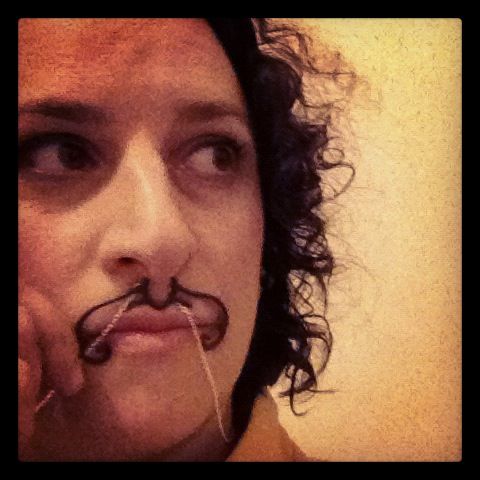 1. What does self-compassion mean, what is it? How would you describe or define it?
For me, self-compassion is about learning to show my self the love and kindness I would show to my family and dearest friends. It is also about being open to love and kindness and openness from my self during my most painful, shameful and lonely moments.
Self-compassion feels spacious and calm and at peace with what is… even if the what is doesn’t look like what you hoped it would or think it should.
I am developing a definition of self-compassion that starts with gentle but clear boundaries, especially in my parenting, supported by practices such as breathing and calming mantras to stay present to strong feelings that arise without being overwhelmed by them.
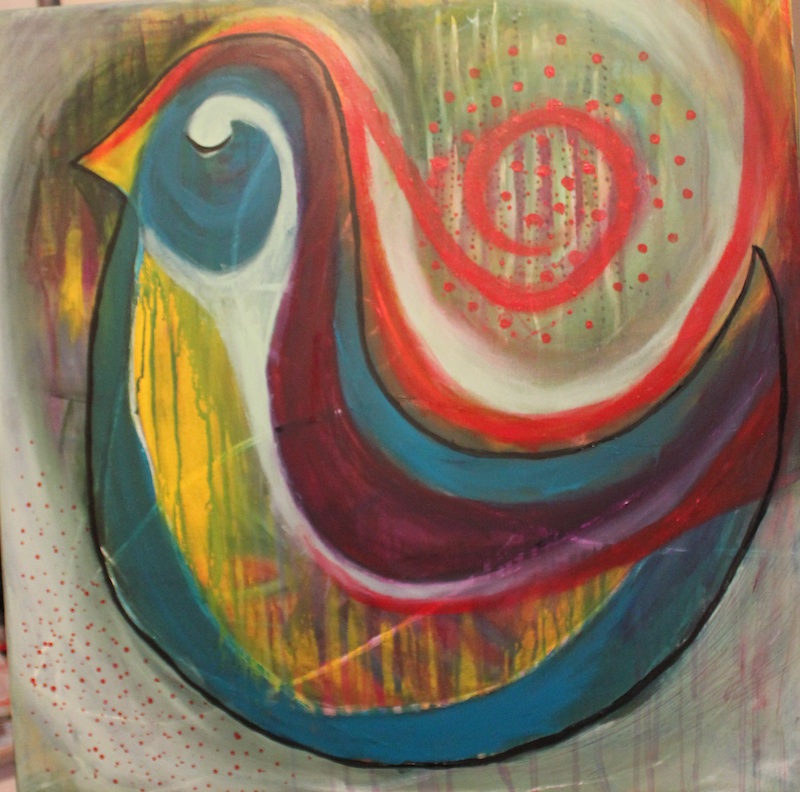 2. How did you learn self-compassion? Did you have a teacher, a guide, a path, a resource, a book, a moment of clarity or specific experience?
I only developed a clear understanding of what self-compassion means for me very recently. Working with a compassionate and trusted therapist was the most profound and effective path to this new level of insight.
But a big part of my “enlightenment” was also facing the reality that an aha! moment is one thing, but staying open in the moment to choosing a new response to an old anxiety is very much another.
I consider myself a work in progress when it comes to self-compassion and am hopeful that my journey will give my daughter the courage to do her own investigations when she is older.

3. How do you practice self-compassion, what does that experience look like for you?
I have a very recent example of this! Just this weekend, we returned from a family holiday in New York City. Now, I have long known that I am something of an anxious parent. My parents were anxious parents, as were their parents before them. But being away from home – somewhere as populous and busy as New York City, no less – made me realise just how deeply ingrained my anxieties are, and how much their underpin the daily routine I have constructed for my self and my family.
One day, the effort of grouching at an independent little four year old for wandering off in hectic Manhattan crowds became too much. My husband held me as we sat in the park next to the Natural History Museum and I cried. In that moment, I realised just how more relaxed I was when my daughter remained in her stroller, and how often we used the stroller at home when we really didn’t need to. My justifications had been pretty valid: flagging focus and energy levels after kindergarten, and greater efficiency when running errands. But I also saw the reality that containing her brought some comfort: if she was sitting, then she wouldn’t trip and hurt herself; if I could control the pace at which we moved, there would be less opportunity for disagreements and meltdowns.
Now, obviously there was a common sense aspect to this i.e. I had every right to be cautious about a little person getting lost in a crowd in New York City. After all, New York City is not Melbourne, Australia (and there is cause for caution in Melbourne, Australia at times, too).
But in that moment, I got caught in the push-pull of my anxieties that she’d get lost, hurt or abducted verses the voice that told me I was holding my daughter back by keeping her restrained. So, either way you looked at it, I was an awful mother.
Once the moment had passed and I was able to breathe my way through to a quieter space, I saw that so many of my anxieties were based on “worst case scenarios” handed down to me by may parents. I saw myself walking on eggshells every minute of the day. It suddenly didn’t seem so strange that I had suffered adrenal burnout over the past few years, or that we’ve had so much difficulty conceiving a second child.
 Suddenly, I felt flooded with compassion for the woman who was just so relieved when her daughter napped or sat happily eating in her high chair or watched TV. Suddenly I understood why that those moments were lifelines for a new mama who, just for a moment, needed to not worry about whether her daughter was safe or happy. I also felt a deep gratitude for my parents, knowing that they had raised me with even more intense “worst case scenarios” handed down by their parents (the latter of whom had lived through civil war, the Second World War, extreme poverty and violent occupation of their homeland).
Since returning home, I have been working on gently dismantling the iron grip of my anxieties and redrawing some of the boundaries on my daughter’s behaviour. The stroller has been folded up and put away. There are greater limits on TV time. I still require my daughter to hold my hand at times but I am allowing her to walk and wander a little more and, increasingly, use her scooter. Her exhilaration as she glides on her scooter is palpable! And gorgeous to watch.
There is still a gnawing in the pit of my stomach that she is going to trip and fall. Sometimes, my therapist’s mantra “You can’t plan for catastrophe” feels like a lifeline.
Maybe my daughter will fall and maybe she won’t. But if she does, she will learn from first hand experience that I will always be there to hold her when it hurts.
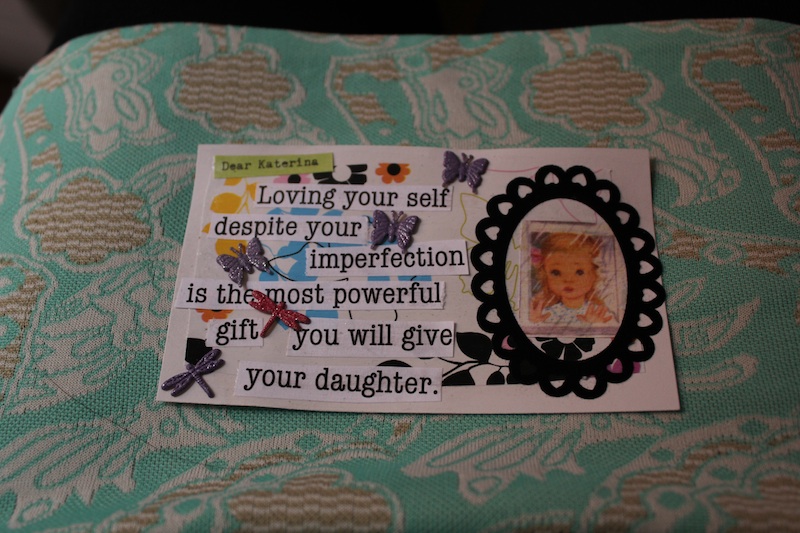 4. What do you still need to learn, to know, to understand? What is missing from your practice of self-compassion, what do you still struggle with?
To be honest, it feels like my true work is only just beginning.
Up until now, I had read so many personal development books, used writing and art as therapy, taken e-course after e-course, chosen powerful words to guide me through the year, talked with dear and trusted friends over many glasses of red. But it was only through the painful process of deep excavation with a therapist – then using the tools she had given me to really see my self – that I understood what self-compassion truly meant for me.
Feeling compassion for a friend, and acquaintance, even a complete stranger (even someone I don’t especially like!) comes easily to me. Feeling compassion for my self “in theory” or when everything is calm and thriving in my world is also relatively easy.
But being gentle with myself when I am in the throes of anxiety – times when my fight-or-flight mechanisms kick in and I am less likely to give myself permission to slow down and reflect, and am also rather prone to making rash decisions and lashing out verbally – that takes a lot of work. And a huge part of that will be practicing self-compassion when I don’t get it right.
It’s exhausting… but as exhilarating as flying down your street on your scooter as a four year old.
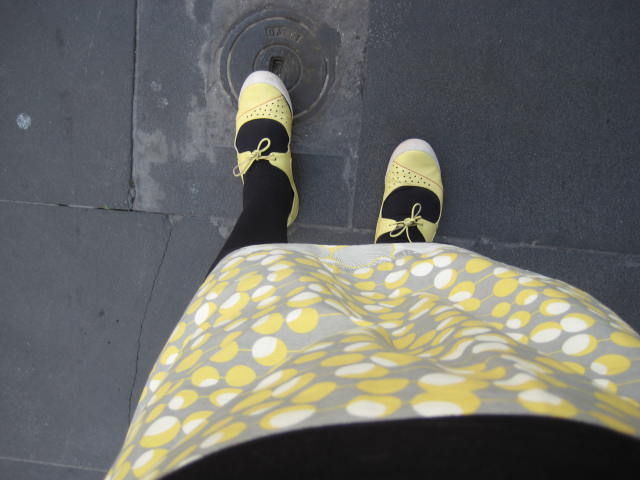 Kat emailed me recently and asked me to add this: P.S. Now, many weeks after returning from our incredible holiday, I can finally share that our long-awaited second child has made his/her presence felt! At the time this post is published, I will be just on 17 weeks pregnant. And I know, as sure as I know anything, that the soul work Jill invited me to share here was critical in helping me create the emotional and psychical space to welcome a new soul into the world. For that, I am so grateful… to my support systems, to the universe, to my self.
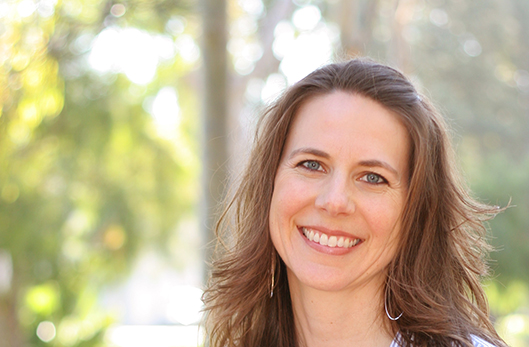
 I’m so happy for Kat, so grateful to her. To find out more about her, to connect with her:
- Visit her website
- Follow her on Twitter
- See her art on Flickr
- Follow her on Instagram
Next on Self-Compassion Saturday: Barbara Markway.
P.S. If you didn’t see the first post in this series, you might want to read Self-Compassion Saturday: The Beginning. Or make your way through all the posts tagged Self-Compassion Saturday.



 Open Space Practice, (AKA: A Thousand Shades of Gray)