Monthly Archives: October 2013

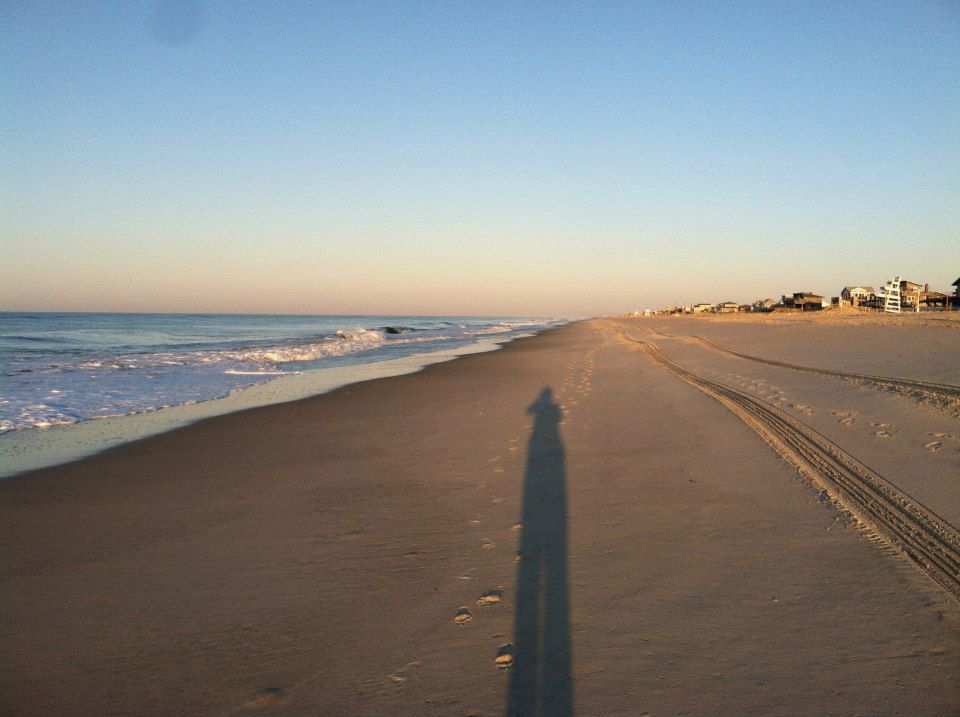
Day of Rest

softdexterConfession: Even though I don’t talk about it as much as I did, I am still missing Dexter something awful. I was looking through my archive of journals this morning for something specific I wanted to write more about, stumbled across my entry from the day Dexter died, and maybe partly because Sam and Eric were gone on a walk and I was alone and knew no one would hear me or be upset by it, I started sobbing. It seems harder to “get over” this loss because I still wasn’t really over losing Obi or Kelly when “it” happened again. And to be quite honest, since I’m confessing, coming clean, in the past five or six years really awful stuff has happened, much of which I didn’t talk about here, either because it was someone else’s stuff or because the consequences of speaking out were too great. Add that to the fact I’m an introvert and Highly Sensitive Person who is easily overwhelmed and it’s a toxic mess.

Stress, suffering comes from resisting what is happening, when things aren’t going the way we wanted, and no matter how evolved we might be, how able we are to stay with, cope with the hard stuff, no one wants to see those they love suffer, get sick, or die. My delusion that I should be able to help, to fix it, and smashing myself to bits if I can’t, only adds more suffering.

Continuing in the spirit of confession, yesterday I ate an entire bag of Smart Puffs. They are all natural, gluten and trans fat free with no preservatives, and an entire bag is 630 calories, which is less than a Big Mac or a Peanut Buster Parfait, but still it was a deliberate binge. I was tired, frustrated that my energy wasn’t keeping up with everything I wanted to do, so I took a break to watch TV, a really good show from Mike Birbiglia, My Girlfriend’s Boyfriend. I finished off the tail end of a bag, less than 10 puffs, could have stopped right there, but made the decision to open a new bag. Multiple times I made the decision to keep going, keep eating, and eventually finished the whole bag.

(This video has been helping me to be gentle with myself when I eat something I think I shouldn’t, I remember his sweet little voice listing off everything he’d eaten, groan about how it was too much, and it makes me smile, have a sense of humor about it rather than beating myself up)

Underneath any binge is always the collection of all the other hard stuff I haven’t quite been able to deal with, all the bad stuff that’s happened, the things I’m sad or worried about, what’s been lost, the various times and ways I’ve abandoned or denied myself.

The bottom line, whether you weigh 340 pounds or 150 pounds, is that when you eat when you are not hungry, you are using food as a drug, grappling with boredom or illness or loss or grief or emptiness or loneliness or rejection. Food is only the middleman, the means to the end. Of altering your emotions. Of making yourself numb. Of creating a secondary problem when the original problem becomes too uncomfortable. Of dying slowly rather than coming to terms with your messy, magnificent, and very, very short—even at a hundred years—life. The means to these ends happens to be food, but it could be alcohol, it could be work, it could be sex, it could be cocaine. Surfing the Internet. Talking on the phone.

For a variety of reasons we don’t fully understand (genetics, temperament, environment), those of us who are compulsive eaters choose food. Not because of its taste. Not because of its texture or its color. We want quantity, volume, bulk. We need it—a lot of it—to go unconscious. To wipe out what’s going on. The unconsciousness is what’s important, not the food. ~Geneen Roth, Women Food and God.

whatareyouhungryforI am rereading Geneen Roth’s Women Food and God. You already know, if you’ve been reading, that I am working with a therapist who specializes in dis-ordered eating. I’m also starting a book group with the book Intuitive Eating led by Rachel Cole. I’m making an effort, but in other ways I am surrendering, letting go of effort, letting go of pushing and trying and forcing. I also am back to weighing the most I’ve ever weighed, after losing this same 20 pounds six years ago, having hired a trainer and started yoga and even running and going on yet another diet, starving myself down to what seemed acceptable. Slowly the weight came back — some due to more food less movement, some because of the shame I felt being called obese by someone who was supposed to be helping me, some of it because my body is changing and my metabolism and energy levels just aren’t what they were — but mostly because I wasn’t dealing with the underlying issues.
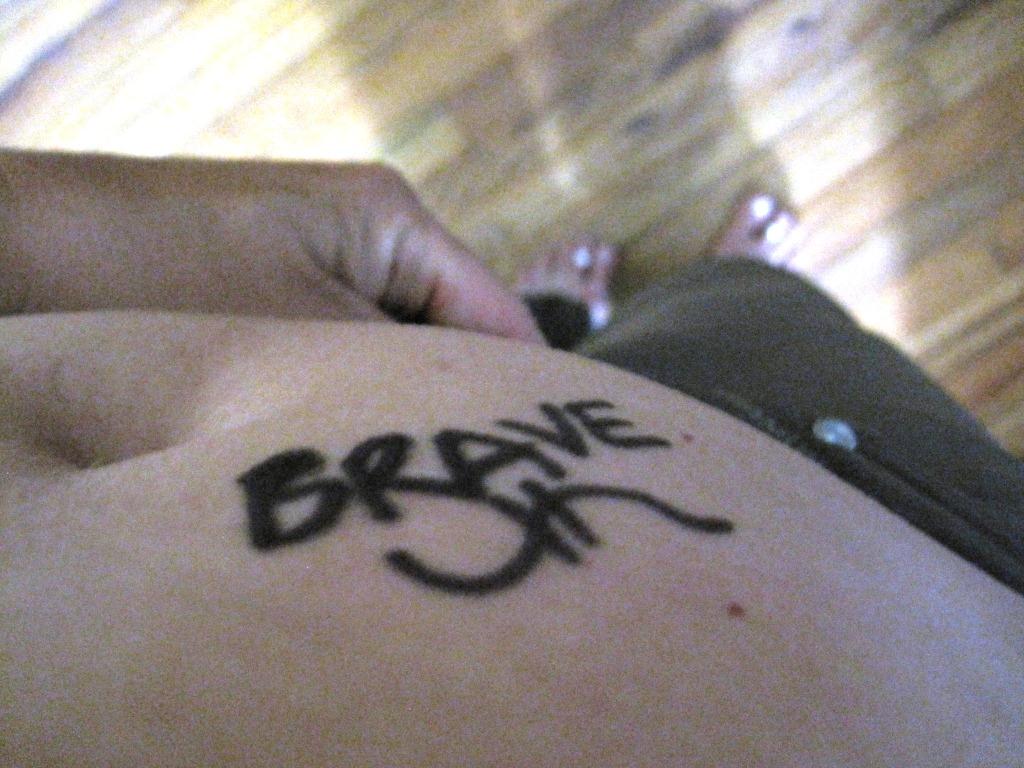
Brave Belly

When you believe without knowing you believe that you are damaged at your core, you also believe that you need to hide that damage for anyone to love you. You walk around ashamed of being yourself. You try hard to make up for the way you look, walk, feel. Decisions are agonizing because if you, the person who makes the decision, is damaged, then how can you trust what you decide? You doubt your own impulses so you become masterful at looking outside yourself for comfort. You become an expert at finding experts and programs, at striving and trying hard and then harder to change yourself, but this process only reaffirms what you already believe about yourself — that your needs and choices cannot be trusted, and left to your own devices you are out of control. ~Geneen Roth

I don’t want to keep doing this, cycling through restriction and binging, punishment and control followed by rebellion, shame and smashing myself to bits. I’ve lost all sense of what my authentic body might be and I want to discover it, that point at which I am both happy and well, sane and healthy. I want to reach the point where I can stay open to what is happening, show up for what is exactly as I am, to feel the full weight of how sad I am, how much I have lost, allowing how much it’s going to hurt. And the one thing I know for sure — it’s not about the food.

Self-Compassion Saturday: Jennifer Matesa

I first found Jennifer Matesa’s blog, Guinevere Gets Sober, when I was doing some internet research on addiction. I don’t remember the exact thing I was searching for, could have been as general and nonspecific as “addiction,” as it is an ongoing theme in my life, something I am always working with.

I was immediately struck by the fierce honesty of Jennifer’s writing, like a wind so strong you almost can’t keep your eyes open or breathe, that in the end clears everything out, makes you feel clean and alive, awake. She was able to verbalize things I knew in my gut, had experienced, made me feel sane around something that can feel so crazy, so out of control, so threatening and desperate.

The more I’ve gotten to know her, read her work, the more I adore her. We have a lot in common — dogs, meditation, writing, and teaching, and oh yeah, addiction. She is also an amazing artist, a loving and present mom, a beautiful mess of a human, and a total badass. I am so glad to share her with you today, specifically her perspective on self-compassion.

jennifermatesa021. What does self-compassion mean, what is it? How would you describe or define it?

In modern parlance, the word “passion” means strong feeling, more colloquially strong sexual feeling, but the root of the word is a Latin word meaning “to suffer.” So we get Christ’s “passion,” his trip to the cross, for example. So if we add the prefix com-, the word to me means “to suffer with.” And that’s a hard job to do—when someone is suffering, to suffer along with them.

We all know that life is about suffering. Even when it’s about joy, it’s about suffering (see below). Most of us want to know that we’re not alone in that suffering. And because it can be hard to establish a truly loving community—even a community of two, say in a marriage—humans will go to great lengths to numb out the suffering, using food, drugs, booze, gambling, sexuality, exercise, you name it. We put something into our bodies that makes us not-care. Today we have really top-shelf designer chemicals, including designer sugars, that can help us numb out.

So really the bottom line, the existential problem here, is that we all face life and its joys and challenges alone—and even joys can make us suffer, because the edge of true joy is so sharp (see even further below). And we know joy won’t last. But we want to make it last, or we want to numb out our fear of it not-lasting.

jenniferhandwritingI write a lot about addiction and recovery, I report from the body, and I’ve come to think of drug-use and addiction as self-abandonment. When I’m in my addiction, I abandon myself. This is one of the most powerful ideas I’ve learned.

Self-compassion is an antidote. Self-compassion asks me to be my most reliable companion on the spiral staircase of life. I may have other companions along the way, but only my Self will be with me 24/7.

2. How did you learn self-compassion? Did you have a teacher, a guide, a path, a resource, a book, a moment of clarity or specific experience?

For me it’s an ongoing project. I grew up in an alcoholic family that was by turns crazy and preternaturally calm, as in the calm before the storm. I learned first to ally my feelings with the crazy-makers, to take care of the people who were going nuts so I could try to hold off the downpour. Of course, this is an impossible project—an anti-rain dance. People call this “codependence.” I’ve started calling it self-abandonment.

I’m learning self-compassion on a day-to-day basis by practicing the principles that helped me detox off a shitload of painkillers five years ago. I never, ever, ever thought I’d be able to quit taking those drugs, I was on such a high level for so long, and after years on them I had no idea how to live without them. (More and more these days, physicians and addiction professionals are claiming that folks like me are sort of genetically unable to live without drugs, which I’m happy to offer living proof is wrong.) I have a community of people around me who are able to live chemical-free and, at no charge, they’ve passed down the principles that allow them to do this. Without practicing those principles, I’d either be dead or in prison. The basis of those principles is deep, authentic self-love.

jennifershadowBy “practice” I mean just that. Like a kid who has to practice his piano scales for half an hour a day. Like a kid who has to stand in front of the ball-feeder and hit her forehand. It’s spiritual fitness, it’s just practice. Which means I need to expect to hit a few foul balls. Which is such a relief after expecting myself to bat .1000 for the first 40-some years of my life.

I’ve read Stephen Mitchell’s translations, and Pema Chodron and Thich Nhat Hanh. But I’m more grounded in literature. Shakespeare (both plays and sonnets), Karen Armstrong, Mary Karr, David Foster Wallace, Terry Tempest Williams, Kathleen Norris, Adrienne Rich, Toi Derricotte, Sharon Olds, and too many others to choose, including anonymous stories of people who have found moments—sometimes long stretches—of self-compassion. I also love children’s books. Roald Dahl, Russell Hobbs, John Burningham. Quentin Blake’s Zagazoo is one of the most amazing stories of self-compassion I’ve ever read. The characters in his many books practice accepting their own idiosyncrasies and oddities and beauty and sadness, living inside the light places and the dark ones. I’m glad to have read them to my son when he was a little boy. I believe they shaped his consciousness.

jenniferflowerI’ve had many moments of clarity. Quite often they’re small moments that carry great power. I’ll tell you a story about the most recent one. This July I visited New York City and Fire Island. So I have almost four years sober, and five years off drugs that could have killed me, and I drove to Manhattan with my new road bike and met up with a friend who’s an athlete with 30-some years sober. He also grew up in an alcoholic family, and we have a lot to talk about. He took me on a 12-mile nighttime ride through the city, starting in West Harlem, through Morningside and a couple circuits around Central Park, then finally down the length of Fifth Avenue from 59th Street. The Fifth Avenue stretch was three miles—on a Saturday night, prime club-hopping time, no bike lane, yellow cabs weaving in and out like swarms of bees. I relaxed into following this person I trust and at one point nearly got squeezed by two cabs fighting for a spot at the curb. My instincts saved me. I realized that, at any moment, a cab could take either one of us out for good. Yet there we were, speeding down Fifth Avenue on a clear Saturday night, completely present and aware, telling stories at red lights, choosing to do something with our bodies other than drinking and partying and spending tons of money, and of course there’s no language that’s not cliché to describe the gestalt of the scene — “center of the universe”? “heart of civilization”? the core of the Big Apple, blah blah blah. I thought, “We’re out of our fucking minds!” And then I thought of watching my mother die at 58 of lung cancer from a lifetime of chain-smoking, I thought about her abusive childhood that was more damaging than mine, and I thought about how she’d never done anything like this in her life. Not anything like it. She was living in a deeper insanity than I do. The next day I stepped onto a ferry to Fire Island and I’d left my car and my bike in the lot on the mainland, and I had just a few necessities, and a close friend was coming to meet me at the dock, and as I sat on the top deck watching the sun set and the fog roll in over the sound I felt enormous joy in my chest, white-light, as if my ribs would rip apart.

jennifermatesa3. How do you practice self-compassion, what does that experience look like for you?

Here’s the important part of the story I just told: at the moment I felt that joy, my mind told me, You don’t get to feel this. That’s the divide that happens, the moment when I have a choice about whether to practice self-compassion. I don’t get to feel this. But when I sank back into my body, when I allowed myself to feel what my body was feeling, I realized, I’m feeling joy. It’s real.

The body does not lie. That’s why I say I report from the body. All my books and a lot of my other stuff is about that. My new blog does that, and so will my forthcoming book.

jenniferbronze

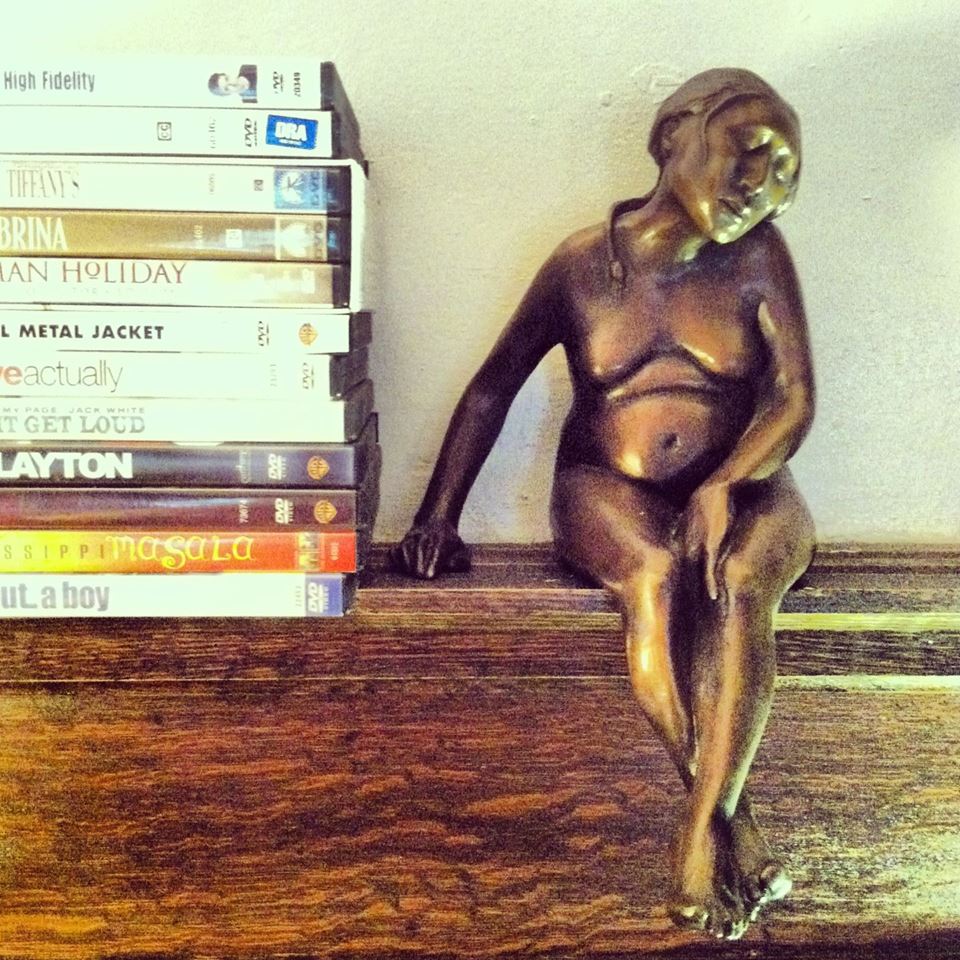
Bronze cast by Roxanne Swentzell, Santa Clara Pueblo, N.M.

4. What do you still need to learn, to know, to understand? What is missing from your practice of self-compassion, what do you still struggle with?

I struggle with understanding what’s real and what’s not real. I live a great deal of the day in my head. As a kid I learned to deal with family stress by making up stories, or imagining myself into other people’s stories—either in books or the lives of other real people. Because much of the time Real Reality was intolerable. So I just Made Up Shit. I made up my own reality, and I lived there for a long time. This instinct is as old in me as my heart is. I still have pajamas and a pillow in that space.

I mean, this is normal to an extent. Human imagination is divinely designed to relieve us of the pain of reality, and it’s also there to enlarge human experience through creativity, the making of art and the expansion of perception. Imagination is very old: the cave paintings at Lascaux and Altamira accomplish all that stuff. I’m reading a book about the evolution of singing, and it turns out we learned to sing not only as a survival tool to scare the lions away but also as a method of moving into trance, into our own imaginations, into contact with emotion and spirit. Singing helped change the shapes of our bodies and minds; it helped us ask the first question. No other ground-dwelling animal sings. Human beings need that experience of expansive perception. But craving it, using imagination compulsively to break from reality, using it to the point where you can’t tell reality from unreality is, in its further stages, I think, called psychosis!

So my self-compassion practice today is about distinguishing reality from my imaginings and fantasies and fears. What helps is meditation, prayer (whatever that is), and checking in with people I’m pretty sure are sane and healthy and relatively content.

jenniferselfportrait

self-portrait

I am so grateful to Jennifer, for taking part in this series and for continuing to write, work, and live in a way that makes things clear, showing up for what is hard, for what hurts, and finding a way through it, offering up her experience, her path as a map to others. Jennifer is working on a new book about physical recovery from addiction to be released next year, and is a 2013 fellow at the Substance Abuse and Mental Health Services Administration. To find out more about Jennifer, to connect with her:

Next on Self-Compassion Saturday: Sandi Amorim.

P.S. If you didn’t see the first post in this series, you might want to read Self-Compassion Saturday: The Beginning. Or make your way through all the posts tagged Self-Compassion Saturday.