

This week’s post is a little different. Before starting this series, I had never “met” Barbara Markway, didn’t know much about her even though I had seen her Self-Compassion Project. Three weeks after I published the first Self-Compassion Saturday, she sent me an email to tell me that she had a Google alert for self-compassion and in that way had found my blog. She explained that this was the kind of thing she wrote about a lot, if I ever wanted her to do a post.
How cool is that? Of course I said “yes, please.” And that makes this post completely unique — everyone else I sought out, asked, begged to contribute, but Barb found her own way here because of our shared interest in the subject. Her biography on Psychology Today describes her this way,
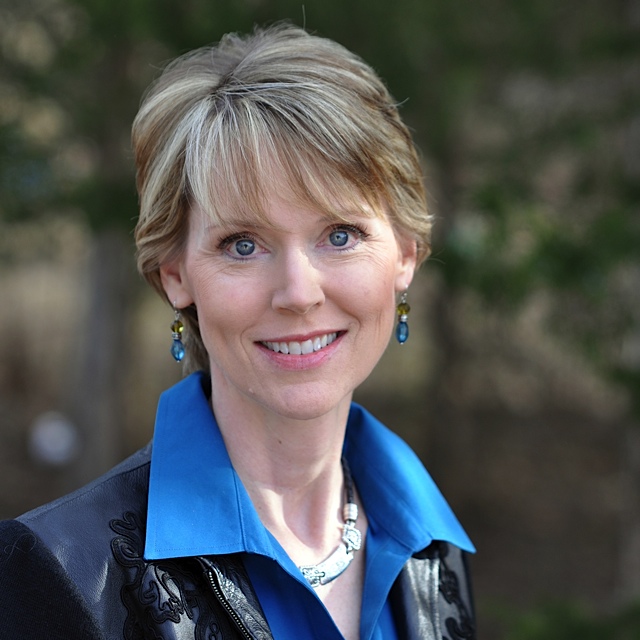
Dr. Barbara Markway, Ph.D., is a psychologist with over twenty years of experience and the author of four books–three on social anxiety/shyness and one on marriage. Her first book, Dying of Embarrassment: Help for Social Anxiety & Phobia, was named one of the most scientifically valid self-help books in a study published in Professional Psychology, Research and Practice. She has appeared on Good Morning America, The Today Show, and featured in the PBS documentary Afraid of People. Her work has been featured in the New York Times, Chicago Tribune, Washington Post, Prevention, Essence, American Health, Real Simple and Web MD. She has been heard on radio shows across the country. Dr. Markway’s recent interests include self-compassion and she writes about her own experiences at The Self-Compassion Project.
I’m so happy Barb reached out to me, so happy to share her perspective on self-compassion with you today.
 1. What does self-compassion mean, what is it? How would you describe or define it?
I really like psychologist and researcher Kristin Neff’s 3-pronged definition of self-compassion.
The first component is self-kindness, which is what most people probably think about when they think of self-compassion. It’s about talking to ourselves in a kind, gentle way and offering ourselves the support we need.
Another aspect of self-compassion is recognizing our common humanity. In essence, acknowledging that everyone is flawed: this is part of the human experience. It helps to remember that you’re not alone in what you’re feeling.
The third component is mindfulness: being able to recognize, in the moment, that you’re suffering. It’s amazing how much negative self-talk goes on just under your awareness.
It’s been really helpful to me to focus on all three of these aspects of self-compassion, not simply the self-kindness part.
It’s also been helpful for me to remember that self-compassion is not the same as self-esteem. Self-esteem is a positive evaluation of oneself. In contrast, self-compassion is not about evaluating yourself at all. It’s about how you relate to yourself. What a relief that I can offer myself self-compassion, even if I don’t like myself at a particular moment!
 2. How did you learn self-compassion? Did you have a teacher, a guide, a path, a resource, a book, a moment of clarity or specific experience?
What brought me to actively studying and practicing self-compassion was the approach of my 50th Birthday. It was New Year’s Eve, December 31, 2011 and my 50th Birthday was a month away. I realized that if I had to pick one word to describe my life up to that point, it would be “tortured.” I was never satisfied with myself. I frequently thought I hadn’t accomplished enough. I easily became overwhelmed with emotions. I was sensitive to the point that it was painful. I was prone to despair, alternating with diffuse anxiety. And to top it all off, I didn’t have a lot of fun in my life–mostly of my own choosing. When I read Gretchen Rubin’s book, The Happiness Project, I skipped the chapter on fun. I also suffered more than a little shame thinking that all of my training and experience as a psychologist should have made me a bit less of a mess by this point in my life.
So on a whim, I stayed up late December 31, 2011 and started a blog called, The Self-Compassion Project. I’ve used a lot of resources to learn about self-compassion since then. I highly recommend Kristen Neff’s book, Self-Compassion, and Christopher Germer’s book, The Mindful Path to Self-Compassion. I love anything by Tara Brach or Sharon Salzberg. I listen to and watch a lot of podcasts.
 3. How do you practice self-compassion, what does that experience look like for you?
I use some specific techniques, most that I learned from Kristin Neff’s book. One technique I use daily is a gentle touch on my skin (maybe touch my forearm with my other hand) while I say something reassuring to myself. The touch actually releases oxytocin and sets off a calming response in the body. I discretely do this at work when I’m stressed. At home I may give myself a big hug!
Another thing I do is combine the self-compassionate touch with a phrase or self-compassion mantra, such as: “This is a moment of suffering; suffering is a part of life; may I be kind to myself and give myself what I need.”
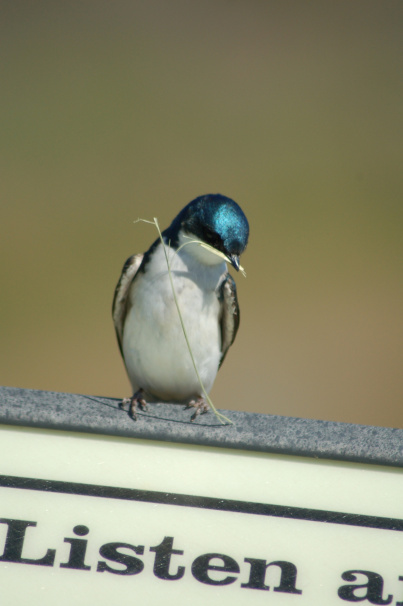
I do a lot of informal mindfulness practice. I never used to take breaks—it was always work. Now I go outside and simply appreciate the beauty around me. This helps me connect with a greater good, and I end up feeling softer and gentler with myself. I have really gotten into bird watching.
 4. What do you still need to learn, to know, to understand? What is missing from your practice of self-compassion, what do you still struggle with?
I still struggle with giving myself compassion around issues of chronic pain. I’ve had several back surgeries, and several other health issues, but a definitive diagnosis is elusive. Toni Bernhard’s book, How to Be Sick, and her blog on Psychology Today, Turning Straw into Gold, have been enormously helpful, though. But I’m not nearly as gentle as I could be with myself around issues of pain.
Then, there are several things I’ve learned, but I know I’ll need to keep relearning them!
One is that even though I love the name of my blog, The Self-Compassion Project, this isn’t something I can neatly do in a year and check it off my to-do list. Self-compassion really isn’t a project in that sense. (Oh, how I love to cross things off of lists!)
 Also, I realized that, in a way, I was trying to trick myself with self-compassion. I said I wanted to be nicer to myself, but I really meant, “I want to change myself.” I thought learning to be self-compassionate was going to change my personality. Somehow, I’d magically become an easy-going, interesting person without worries. I also hoped that life would be easier, I wouldn’t feel things as deeply (sometimes I’m so raw), and I wouldn’t cry as much. DIDN’T HAPPEN. Well, I do think I worry a little less… 🙂
Related to the above, I need to learn not to take everything so seriously—even self-compassion. Sometimes the best thing I can do for myself is watch a Seinfeld rerun and simply laugh.
I could go on and on about what I still need to learn, so I’d better stop now. Thank you so much for including me in this series!
 I’m so grateful that Barb reached out to me, made the initial contact, and have enjoyed getting to know her better — she is so kind. To find out more about her, to connect with her:
- Visit her website
- Follow her on Twitter
- Read the interview she did about her project on Psychology Today
Next on Self-Compassion Saturday: Julia Fehrenbacher. This one is super special, a video interview between Julia and I. Yep, you heard that right — if you’ve never seen me moving around in “real” life, never heard my voice, now you will!
P.S. If you didn’t see the first post in this series, you might want to read Self-Compassion Saturday: The Beginning. Or make your way through all the posts tagged Self-Compassion Saturday.



 Open Space Practice, (AKA: A Thousand Shades of Gray)