

I first encountered Cigdem Kobu’s work by way of an amazing project she created in 2012, A Year With Myself. That fall, I did Reset. Revive. Restart., a collaboration between Cigdem and Sandi Amorim. I am excited in the years to come to take advantage of the support she offers women solopreneurs — she describes that work this way,
I help quiet-loving women solopreneurs build a unique online business with more ease and less stress so that they do their greatest work and earn a lot more doing what fulfills their hearts. I write, I teach, I design e-programs, build websites, connect people, and create peacefully supportive communities. And I teach other creative people (in plain English) how to do the same. I believe business is fun when it nourishes your heart first and that building a business is the best way for deep personal growth.
Everything Cigdem creates is infused with a particular tenderness and strength that is unique to her. She creates safe and supportive spaces where women are able to discover their own power, a fierce love energy that is so essentially feminine. So often, culture attempts to strip women of this power, to bind and restrict them, and Cigdem offers a way out, a “cease-fire,” freedom.
Cigdem is a writer, business advisor and teacher who pursues peaceful triumphs in life, work and art. She also runs the Progress Lounge, a peaceful business haven where she helps introverted women solopreneurs build a sustainable and joy-filled business that fits them like a glove. I am so happy to offer her perspective on self-compassion with you.
 1. What does self-compassion mean, what is it? How would you describe or define it?
For me, self-compassion is keeping a caring, gentle eye on my most important needs and desires – big or small and inner or outer – and giving myself the permission to do more of what brings me ease and energy, and less of what drains me.
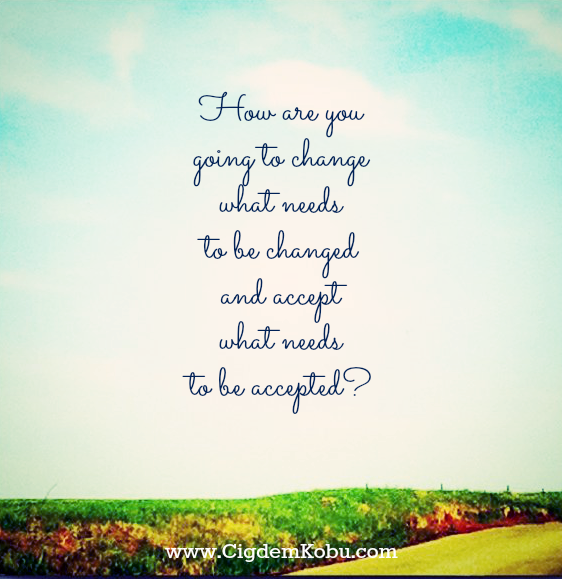 2. How did you learn self-compassion? Did you have a teacher, a guide, a path, a resource, a book, a moment of clarity or specific experience?
It’s been a long process. And it’s a work in progress. Along the way, my guides were people, books, experiences, journeys, and the lessons that come from recalling, untangling and understanding the past. My past, my family’s past and the past of the world we live in.
Other guides?
Perhaps, rediscovering and remembering over and over again that we’re all deeply connected and that compassion and self-compassion, and loving yourself and another or the Earth cannot be separated… Also, finding out that this nugget of truth is one that I must remind myself of day in day out.
 3. How do you practice self-compassion, what does that experience look like for you?
(i) I focus on noticing.
I watch, I observe, and I lean into myself. Self-compassion cannot be thought apart from self-discovery and self-understanding. Everything I do whether related to personal or business growth is deeply connected with self-discovery and the deeper alignment that it makes possible. And for that, the first step for me has always been noticing.
(ii) I allow myself to spend as much quiet and alone time as I need to feel energized.
I’m a hard-core introvert, and if I don’t get my daily quiet and me-time, I can get really cranky – toward myself and others. So quiet solitude is what I MUST HAVE for self-compassion – first and foremost.
For me, and many introverted people, white space incites creativity, quiet is a source of energy, and solitude is rich with possibilities. I’ve learned to appreciate and safeguard all three and summon those qualities in every environment I craft for myself and my kind.
(iii) I encourage myself to say “no” when “yes” is not what my heart desires.
Saying “no” has always been one of the most difficult things for me. It took me very long time to learn to say “no” when I really don’t want to say “yes.” It’s still something I’m learning to get better at.
By nature and because of my upbringing, I hate conflicts and making people upset. Isn’t that true for so many of us women? So in my life, I’ve ended up saying “yes” to so many things even though my right answer was, in fact, a big “no.”
Now I’m a little better at saying no. But just a bit better 🙂
What I still have to learn is to say “no” the way my dear friend Tara Rodden Robinson says in The Reliability Manifesto: “When I speak my ‘no,’ I do so with love and courage. Therefore, I say ‘no,’ plainly, without squirming, apologizing, or making superfluous explanations.”
 4. What do you still need to learn, to know, to understand? What is missing from your practice of self-compassion, what do you still struggle with?
I think today I’m a little better at self-compassion for my inner self. But I still have space to grow in the way I give my compassion to my body and care for my physical being. Honestly, I suck at it these days.
I used to be better at it in the past. I love my business so much that it doesn’t feel like work at all. But this also causes me to forget to take enough breaks, and I sometimes get caught up in doing more, more, more.
I do a lot of writing and creating in front of the computer. And when I don’t take enough time to rest and move, this quickly starts affecting my physical health.
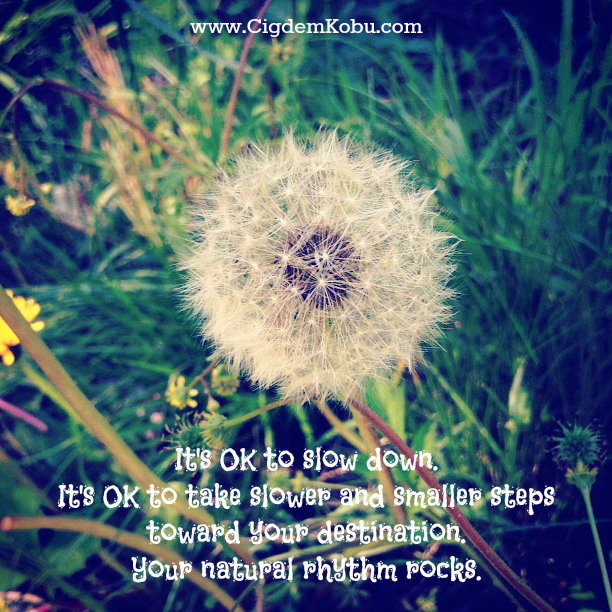
So I have to keep reminding myself that it’s OK to slow down, and that it’s OK to take slower and smaller steps toward my destination. My natural rhythm rocks. All I have to do is notice and remember. And also, stand up and move.
Like you always say, this is also about “practice, which means showing up again and again with an open heart.” 🙂
 I am so grateful to Cigdem, for these responses, but also for her honesty about her own experience and her support of women as they make their offering to the world. To find out more about Cigdem, to connect with her:
- Visit her website
- Take her free e-class The 12 Entrepreneurial Laws of Joy and Ease.
- Follow her on Facebook
- Follow her on Twitter
- Pin her on Pinterest
- Circle her on Google+
Next on Self-Compassion Saturday: Lisa Field-Elliot.
P.S. If you didn’t see the first post in this series, you might want to read Self-Compassion Saturday: The Beginning. Or make your way through all the posts tagged Self-Compassion Saturday.




 Open Space Practice, (AKA: A Thousand Shades of Gray)