
 Remember how I said last week I could write a whole book about practice? How the post I wrote then couldn’t possibly say everything there was to say about it? I hadn’t planned a Life Rehab Resource post for today, but when I started writing and one accidentally fell out, it was about practice. So here we are, Part Two.
I just did my first yoga series out of a Yoga Journal. On one of our morning walks this past summer, we went by a house for sale that had a full box of about ten years worth of Yoga Journal magazine sitting out front on the sidewalk. I passed it up at first, tried to convince myself I didn’t need them, was in the process of decluttering, but ended up going back for them.
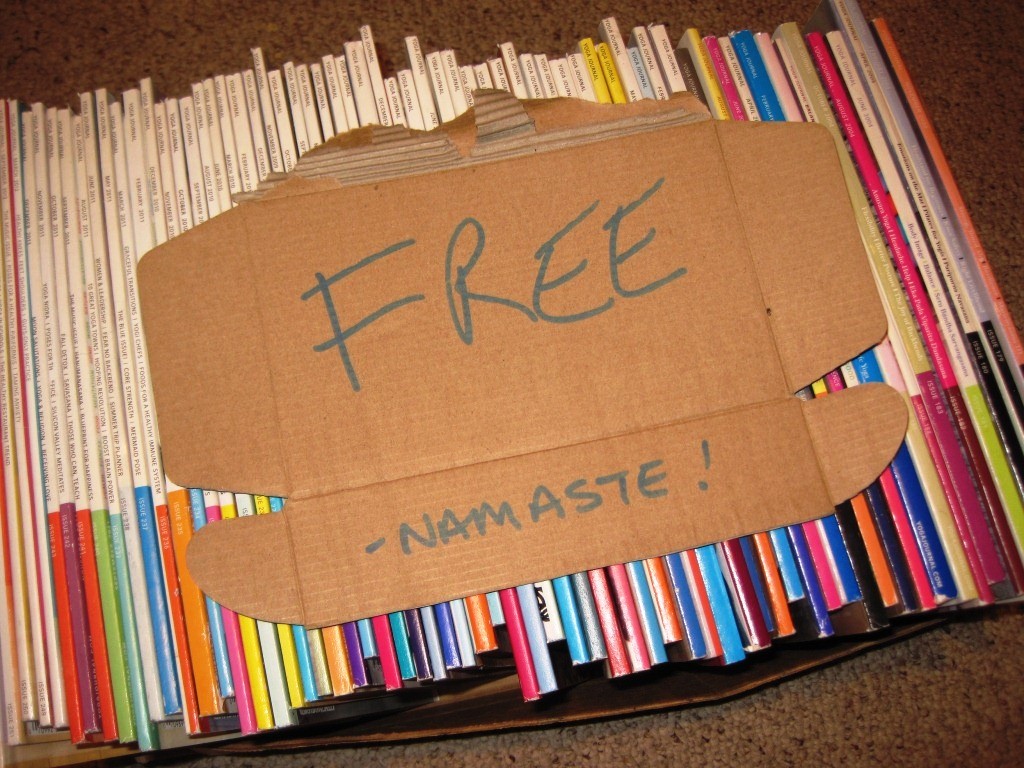 Now that I’m training to be certified as a yoga instructor, I decided to go back through the old issues and do some of the series, see if there was anything I wanted to “steal.” I’m going to try and do one new series a day, supplement my own practice. I’m not making it out of the house to as many classes, so need to do more on my own at home anyway, start building my own vinyasas (a series of poses).
When choosing a Yoga Journal this morning, I went with the earliest November issue I had that included a series, since that’s my birthday month. Oddly, even though the oldest issue I have is from 2003, there wasn’t a November issue with a vinyasa until 2008 — my last birthday before everything shifted. By February 2009, just a few months later, both Kelly and Obi would be diagnosed with cancer. I had been practicing yoga for a few years by then, using a mat Obi had chewed a tiny hole in when he was just a baby.
 Just like writing and meditation, the practice of yoga came to me in fits and starts. It was years after my first attempts that yoga became a regular thing for me. As with those two other practices, when it finally stuck it felt essential, like I’d die if I didn’t do it. And when I say “I’d die,” that’s not just an exaggerated way of saying how important it was, it’s the truth. Writing, yoga, meditation, and dog, practice, saved my life.
And just like with writing and meditation, the benefit compelled me to want to share, to teach the practice to others. This is where I find myself now, training to be certified as a yoga instructor, going through old Yoga Journals looking for ideas.
 The series today was “Invite Quiet.” It suggested that November was a season for turning inward, just like nature does, and that this series of forward bends could help cultivate quiet.
Forward bends are, by their nature, introspective and meditative…Forward bends are calming to the nerves, soothing, and grounding. These poses teach us yoga is as much about surrender as effort, if not more so. ~Yoga Journal
This, I would suggest, is true of practice in general, of life, that it’s “as much about surrender as effort.”
A willingness to surrender is your greatest ally in forward bends [as in practice and in life], helping to quiet the mind and release stiffness…In the spirit of introspection, be more curious about the process than the destination. ~Yoga Journal
As I invited quiet in this practice this morning, other things came:
- the sound of the wind
- the climbing rose bush that needs trimmed back scraping against the front window
- the occasional dog bark and car engine
- the call of geese
- the hum of the heater
- the tick of the clock
- the occasional shift, sigh or snore from the boys, all three of whom were napping
- the memory of what the vet said this morning, that a clean MRI for Sam would be good news since “it might be a tumor”
There’s no place anymore that’s truly quiet, free of all sound. At the very least, there is always the sound of our breath, of our own heartbeat. Where there is life, there is noise. And yet, through practice there seems to be the opportunity to cultivate calm and space, to slow down and be still — which can feel a lot like quiet.


 Open Space Practice, (AKA: A Thousand Shades of Gray)