Tag Archives: NaBloPoMo

#NaBloPoMo: A Funny, Awkward Sort of Comfortable

Obi died 10 years ago today. Even now, I just noticed myself resisting the memory of it, some part of me saying, “don’t go there, it’s too painful.” Obi was diagnosed with lymphoma at just seven years old. Lymphoma is one of the most curable cancers in humans, but in dogs, while it is treatable it’s ultimately fatal. Obi’s initial prognosis was somewhere between two weeks to two months if we did nothing, and because he had T-cell multicentric lymphoma, his chances were even worse. We did chemotherapy, (he was our first dog and other than a barely swollen lymph node in his chest, he was perfectly healthy, AND we had the money so we felt like we should). He went into remission for six months, but the cancer came back before he finished his protocol. Since we knew we were fighting a losing battle, and any extra time was really for us not him, we spent the next three months spoiling him and watching him really close to be sure he still wanted to be here.

He had been feeling worse for a few days. When you have a dog with a terminal illness, one bad day isn’t enough to end it, but two days in a row when you already know you are at the end is absolutely more than enough. He’d been drinking too much water, couldn’t seem to stop himself. Eating was making him nauseous and he was so gaunt, slow, and tired. Looking in his eyes made it clear. He really wanted to stay, to be here with us, but he was just so tired, so done. I had told him all along that he needed to let me know when it was too much, and he did.
My camera broke the night before we let him go. This was back when I only had one camera, and no cameras on our phones. I’d dropped it face down on our concrete patio, the lens was bent so it couldn’t close and it wouldn’t turn on. I panicked and immediately made a plan to go to Target and get a new one, then had a moment of clarity — rather than waste my time and energy on getting a new camera, taking more pictures, I could just be with him.

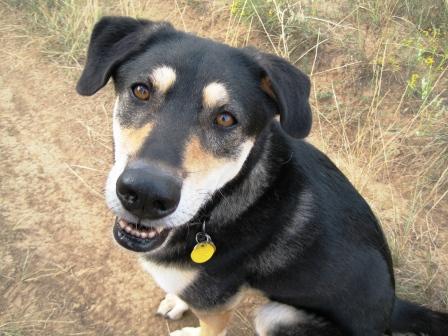
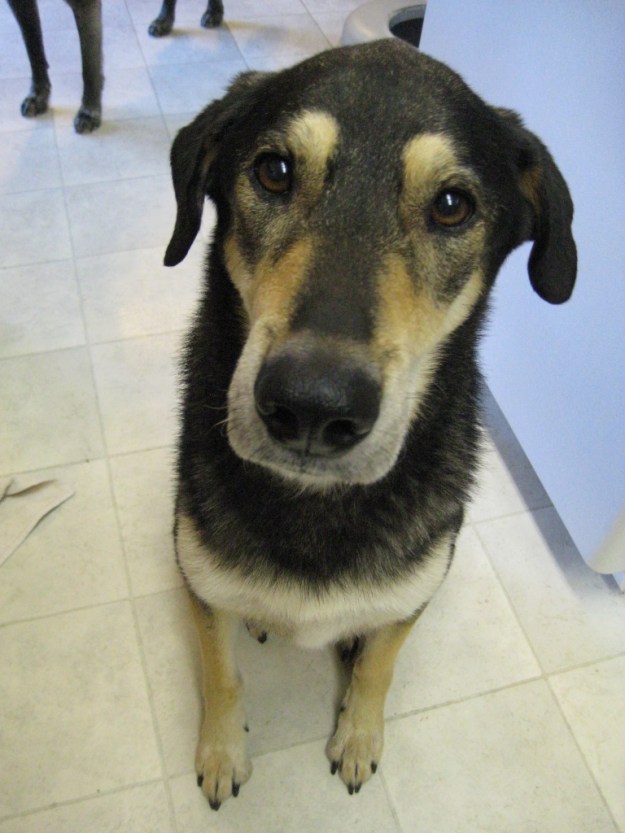
The last picture I took of Obi and Dexter before my camera broke on that last day

We still miss you Big Dude, but now it’s more happy that we got to love you than sad we had to lose you. This kind of grief never really goes away though, you just wear it and carry it for so long that it gets a funny, awkward sort of comfortable.


The day we adopted Obi, April 20, 2002

#NaBloPoMo: Feel Your Feelings

raintreepool

Image from Raintree Athletic Club, “my” pool

At aqua aerobics the other day, a woman suggested we wouldn’t feel how cold the pool was if we thought about something else, that this theory applied to everything in our lives: we’d be happier if we didn’t pay so much attention to our feelings.

Because I’m an introverted hsp, it often takes me so long to process what is happening or being said that the moment has passed before I’ve formulated a response. That was the case in aqua aerobics when the “don’t feel your feelings and you’ll be more comfortable” argument was made. I knew it was fundamentally wrong, but was still processing the why. I kept moving without responding, not even a “that’s an interesting theory but I’m not sure I agree.” It’s only after sleeping on it that my response became clear.

This happens a lot. It’s weirdly what makes me a better writer, or at least a better writer than conversationalist. I spend a lot of time deeply processing so when I do have a response, it’s full and complete, more meaningful or potentially helpful than what I would have said in the moment. People often tell me I’m a great listener, but it’s really because all I can do when you are talking to me is listen, stay open to what you are saying and silently process in the background. Of course, I give pretty good feedback, even advice if you are asking for it, in the moment, but it’s some time later that I can give my best response. This works out fine if you are someone I have an ongoing relationship and we can return again to a previous conversation, not so great if we meet in passing.

Back to this notion of not feeling your feelings. The idea that to feel is a problem and to ignore them is some sort of life hack. Wrong. So wrong. The only way to transform feelings IS to feel them, to become friendly with them, acknowledge and accept them. What we feel is always useful information. It can reveal if a situation or person is unsafe, help us set good boundaries, uncover the places our needs aren’t being met, make clear someone’s hidden motives, provide crucial information we need in order to react with right speech and right action.

I spent a lot of my early life being asked to keep my feelings quiet, to myself, hidden away. I was taught, directly and by example, not to trust or honor my feelings. I was gaslit and silenced, told my feelings didn’t matter, that I was confused and wrong, that I must just be hungry, sick, or tired. Not being able to trust or even access my feelings got me into a lot of trouble, allowed me to stay in situations that were harmful, waiting for someone else to tell me how I should feel. It got to the point I couldn’t even find my feelings anymore, didn’t recognize or understand them when they did arise.

Feeling your feelings doesn’t mean you always have to act on them. Along with allowing ourselves to feel, we cultivate self-awareness. We contemplate what might be triggering the feelings, the various ways we might be confused or compromised, and we cultivate the self-discipline to not automatically react but rather wait until we have some clarity.

It seems to be a particularly white female neurosis to believe that we can control our experience through self-denial. To think that things will go better, everyone will be happy and comfortable if we simply pretend and perform as if everything is fine, even when it clearly isn’t. In fact, to deny your feelings, to dissociate, is a trauma response.

It is safe to experience our feelings. We can be trusted to feel, and whatever we feel is perfectly okay. We also have the capacity and wisdom to determine exactly how to honor our feelings. Do we act on them? Do we hear them out, then let them dissolve and go? Do we determine there is a need to get support, work more intentionally with our feelings? Through practice, we can trust ourselves to know.