

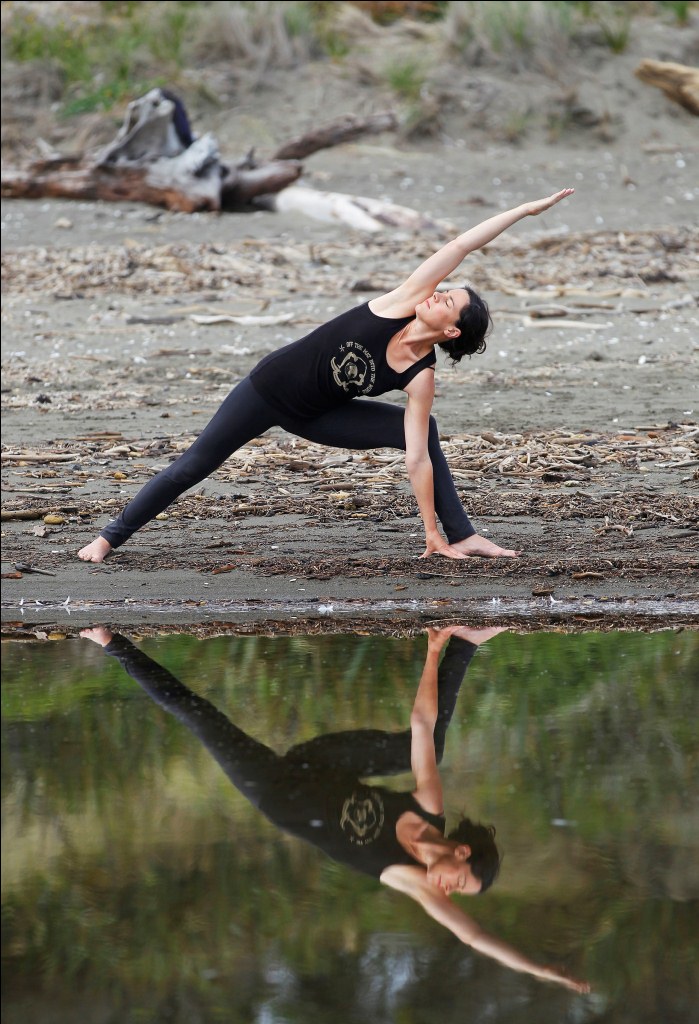
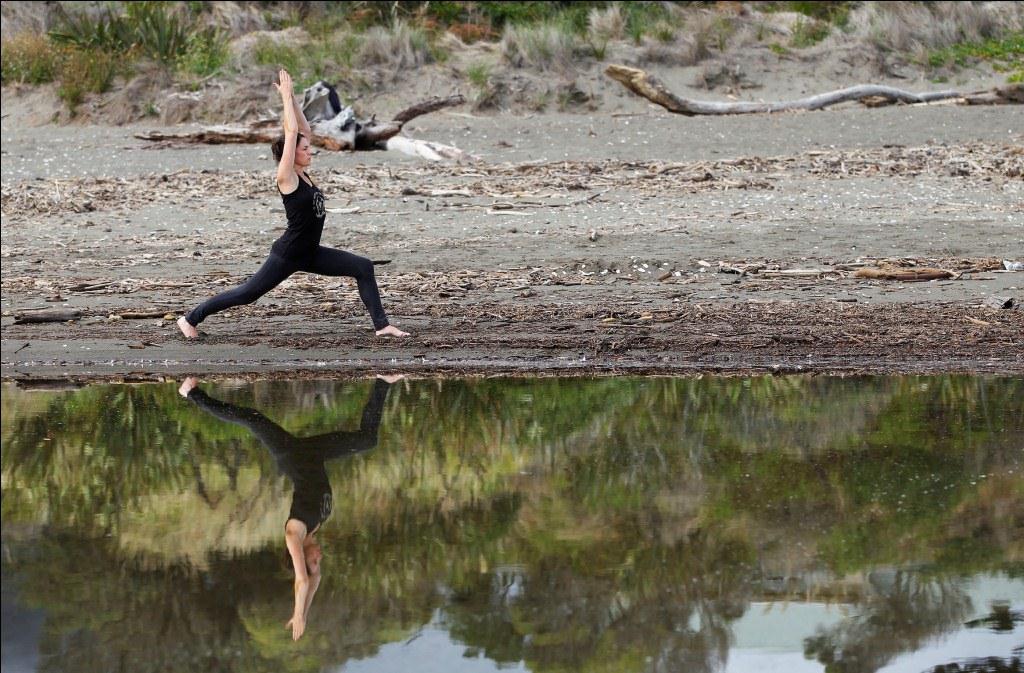
Marianne Elliott is a writer, human rights advocate, and yoga teacher. Trained as a human rights lawyer, Marianne worked in New Zealand, East Timor, and the Gaza Strip prior to her time in Afghanistan, where she served in the United Nations mission (2005-2007). Her memoir Zen Under Fire, tells the story of her work in Afghanistan and the toll that work took on her and her relationships.
Marianne writes and teaches on creating, developing and sustaining real change in personal life, work and the world. She created the 30 Days of Yoga online courses to help people establish and maintain home yoga practices to support them to do their good work in the world. At the holidays – more than ever – we need practices to keep peace with ourselves and others. Marianne created her Zen Peacekeeper Guide to the Holidays to help you find a calm, compassionate path through the holiday season.
I first discovered Marianne Elliott by way of Susannah Conway, at least I think that’s how it happened. It’s hard to tell for sure, because however first contact happened, it quickly became clear that many of the other bloggers, teachers, artists and healers whose work I follow have a connection with her in common. However it happened, I immediately was drawn to how she blends activism and practice, manifesting gentleness as power, showing that soft is strong.
I was lucky enough to meet her at World Domination Summit, to take a yoga class with her. Her energy is simultaneously calming and energizing. She may not be the first person who suggested the idea but she’s the first person I really heard and understood when she talked about the yogic principle of balancing your effort with ease, a concept that has helped me make and sustain an important shift. Along with Anna Guest-Jelley and my local teachers, Marianne has inspired me to enter yoga teacher training. I am so happy to share her perspective on self-compassion with you, kind and gentle reader.
 1. What does self-compassion mean, what is it? How would you describe or define it?
It’s simply being kind to myself – meeting myself, whatever my emotional, physical or psychological state, with loving kindness. As simple, and difficult, as that!
2. How did you learn self-compassion? Did you have a teacher, a guide, a path, a resource, a book, a moment of clarity or specific experience?
I think the first teacher to really speak to me, through her writing, about self-compassion was Pema Chödrön. I was in Afghanistan at the time and suffering a lot. It took reading Pema’s books to see how much of my suffering was being caused by my own harsh judgements of myself, and the mean commentary I had running in my own head.
My meditation teacher Peter Fernando helped me learn self-compassion both through his own kindness – towards me, himself and everyone else I watched him interact with – and through meditation practice.
 Another wonderful teacher for me has been Sharon Salzberg who teaches loving kindness meditation and practice. I’ve recently had the gift of getting to know Sharon as a friend as well as a teacher and she really does embody the kindness she teaches.
Today, thanks to teachers like Peter and Sharon, I practice metta (or loving kindness) meditation regularly as way to cultivate compassion and loving kindness towards myself and others. Here is a link to a free recording of a metta mediation which I’d love to share with anyone who is interested in trying the practice.
3. How do you practice self-compassion, what does that experience look like for you?
It’s a practice of softening towards myself, of connecting to my own heartfelt desire for my own well-being, and finding a source of gentle, sweet kindness towards myself – even when I’ve made a mistake. Metta meditation has helped me cultivate the capacity for this, but it still doesn’t always come easily.
 Here’s an example: let’s say I’ve just ‘messed up’ in some way. Maybe I made a mistake that caused another person some stress or inconvenience or pain. There is a learned tendency in me to be harsh with myself, and often I’ll feel that rough edge of judgement rushing up on a hot wave of shame.
My metta practice can help me pause, in the moment, and connect to a sweeter, gentler place in myself. I can find compassion for myself and extend a hand of friendship to myself, just as I might to someone else. Initially I found that the kind voice in my head sounded a lot like my teacher, Peter, but these days it sounds more and more like me – just a kinder, gentler me than the version that used to rule to roost inside my head!
 4. What do you still need to learn, to know, to understand? What is missing from your practice of self-compassion, what do you still struggle with?
Some days the mean voices are faster, louder and more insistent than my inner sweetheart (as another teacher of mine, Natalie Goldberg, likes to call it). I’m not sure this is because anything is missing from my practice of self-compassion, except perhaps consistency! It’s an ongoing process – to strengthen the voice of the inner sweetheart, being a kind friend to myself in my messiest or darkest moments. But I feel confident in the transformative power of the metta practice.
 I am so grateful to Marianne, for these responses, but also for her presence in the world, awake and compassionate, alive with intention, and for her willingness to work towards easing suffering, in herself and in the world, to show up with an open heart. To find out more about Marianne, to connect with her:
- Visit her website
- Buy her book, Zen Under Fire
- Sign up for Zen Peacekeeper Guide to the Holidays, which starts November 26th
- Do a workshop or retreat with her
- Take one of her courses
- Schedule a mentoring session with her
- Follow her on Facebook
- Follow her on Twitter
- Follow her on Instagram
Next on Self-Compassion Saturday: Sherry Richert Belul.
P.S. If you didn’t see the first post in this series, you might want to read Self-Compassion Saturday: The Beginning. Or make your way through all the posts tagged Self-Compassion Saturday.






 Open Space Practice, (AKA: A Thousand Shades of Gray)