Category Archives: Mary Oliver

Day of Rest

pinkpeonies

Do you also hurry, half-dressed and barefoot, into the garden,
and softly,
and exclaiming of their dearness,
fill your arms with the white and pink flowers,

with their honeyed heaviness, their lush trembling,
their eagerness
to be wild and perfect for a moment, before they are
nothing, forever?
~Mary Oliver, Peonies

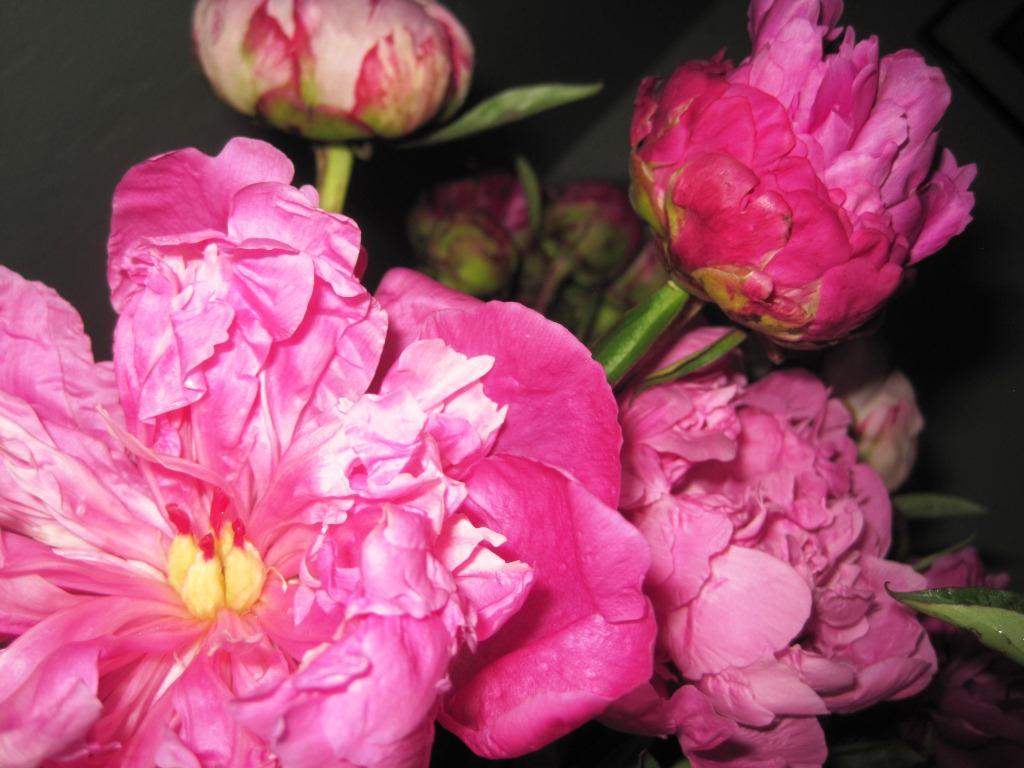
Yesterday, I planted peonies, made a memorial garden of sorts. One Moonstone, “This heavenly-scented peony has large double white flowers with blush pink petals along the outer edges,” one Shirley Temple, “This early bloomer has double blush-white flowers with a hint of red. Pale pink fading to white, these medium-sized blossoms with petals arranged in whorls create a very delicate appearance,” and one Rachel, “This attractive perennial is prized for the amount of double blossoms. The late midseason blooming flowers are a bright crimson color and are held on strong sturdy stems above the clear bright green foliage.” I am completely and utterly in love with peonies, so lush and delicate, strong and soft.
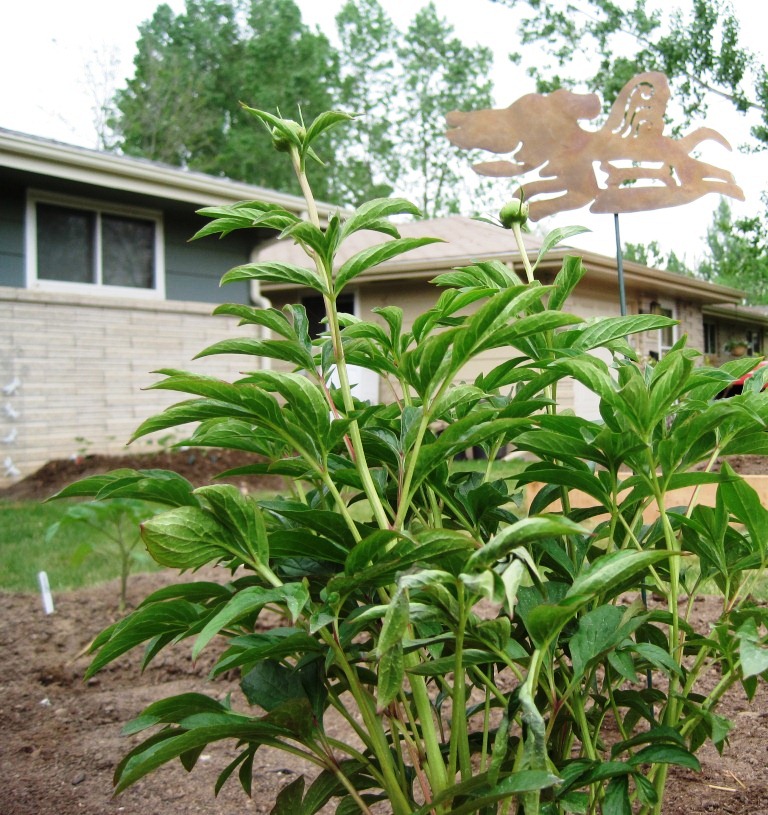
At the nursery, the sign said peonies can live for 50-75 years. They live long, are “drought tolerant, deer resistant, and good for cutting.” My friend Susan, Kelly‘s mom, said she has one that her grandmother gave her for her wedding 45 years ago. I love that. Peonies were blooming at Kelly’s memorial service four years ago. Something about them soothed me, gave me comfort, even though looking at those blooms now breaks my heart all over again. Kelly was an avid gardener, and digging in the dirt, cultivating my garden makes me feel close to her.

peonies

I bought three to start. That number seems right — three for the three I’ve lost but still carry with me, (Heather, Obi, and Kelly), and three to represent all three of my dogs, (one I’ve already lost, one who is somewhere in between, and the one who will have been here for the grief of both losses, helping to heal me). I planted them in the mound where our cottonwood tree used to stand.

That tree was one of the main reasons we chose this house over the other options — that and the big yard, the location (close to Old Town and Lee Martinez Park, only a five minute commute to work for me), and the decorative plaster ceilings. In truth, at already almost 40 years old, the tree was a liability. It dropped a huge limb on our car once, causing $1500 worth of damage. I made a deal with her then that if she dropped another limb that big, we’d need to take her down (we live around the  corner from an elementary school and have lots of kids on our block, and that size limb was potentially lethal, even to an adult if it had fallen just right). A few years later, another came down, so we had to take her out.

she was massive

she was massive, and beautiful, and terrifying

Taking her down, losing her was traumatic. I still remember how it felt coming home and seeing her there, stripped of all her limbs, a man high in a bucket raising his chainsaw to start taking down the first section of trunk. I felt sick. I wanted to tell them to stop, but it was already too late. I hadn’t realized until she was gone that she’d provided more than shade. That she’d been more than a threat, she’d stood guard, somehow protecting us. Without her, without anything between us and the street, between us and the rest of the neighborhood, I felt exposed and vulnerable. It took almost six months for that feeling to go away.

Based on that, it might be surprising we didn’t simply plant another tree. We chose to put in flowers, vegetables and fruit instead, along with a spot set aside to remember everything we’ve loved and lost, with the intent of eventually getting rid of most of the grass. Eric was telling me that he heard a story on NPR the other day about the history of lawns, how people initially put them in as a status symbol, to show their prosperity — if they didn’t need that land for growing food or raising livestock, that meant they were well off. It reminds me of how at one point in history, having a tan marked you as lower class because it meant you had to work outdoors, but then later having a suntan became a symbol of affluence, showed that you had enough leisure time and money for travel that you could afford to spend your days lounging around in a lawn chair or by the pool or on a beach somewhere with nothing better to do.

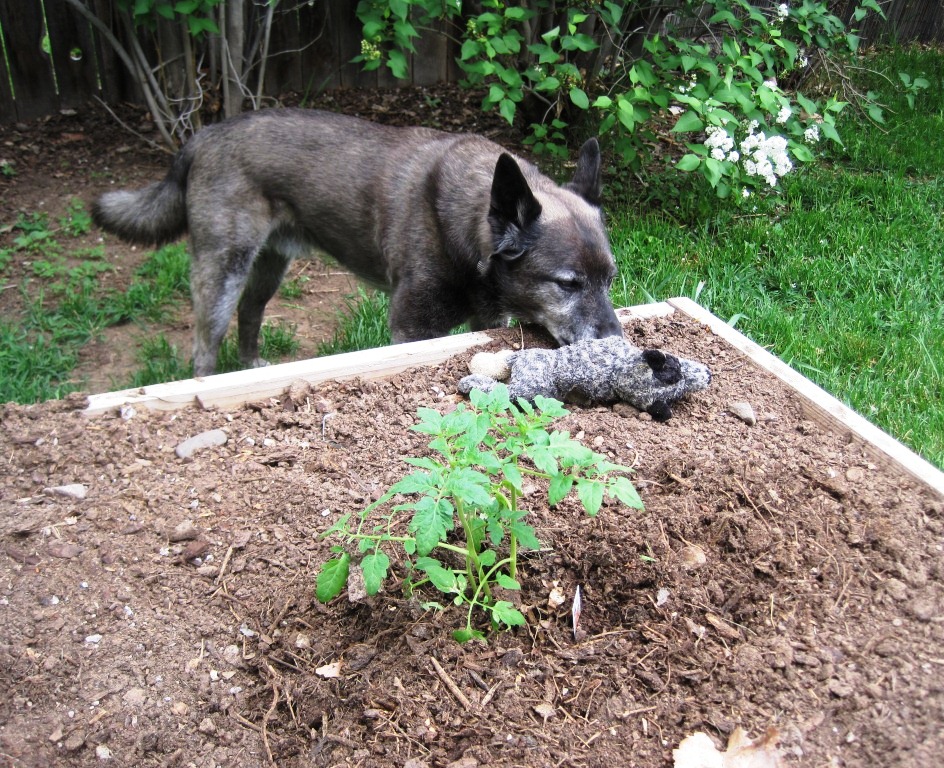
So far we’ve put in three new raised beds for vegetables, made another bed for strawberries, filled in the front burm with irises and other flowers, created a spot for the peonies, and dug out other spots for various melons, squash, and cucumbers. I made sure to put a cherry tomato in the back yard for Dexter (we have three beds back there too), just in case he decides to stick around until there is fruit, (he loves them so much, I sometimes catch him picking them himself — if he gets a green one, he spits it out). This morning, he made it an offering of his Little D, so I think he approves.
Do you love this world?
Do you cherish your humble and silky life?
Do you adore the green grass, with its terror beneath?
~Mary Oliver, Peonies
Letting Go

Susan Piver at Shambhala Mountain Center

Hold your experience with tremendous gentleness. Stay with yourself–always, always, always. Be kind, feel kindly, be loving… As you become friendly toward yourself, you see that actually you can trust your own mind and heart. From this trust and friendship arise unconditional self-confidence. ~Susan Piver

About a month ago, I went to a retreat at Shambhala Mountain Center (SMC) led by Susan Piver. This is the second retreat I’ve been lucky enough to do with Susan at SMC. It was an Open Heart Retreat, “a weekend of meditation practices, journaling, small group dialogue and an exploration of ways we can bring our raw and tender hearts home to the world of family, politics, work, and love.” For me, it was perfectly timed. That morning, I had met for the first time with a new doctor, and she told me “you are obese.” I left for the retreat confused, irritated, and sad.

The retreat provided a safe, supportive space in which to process. And yet, it was not easy. Meditation practice can be difficult because when you sit, the thing that needs your attention, that you’ve maybe been avoiding, is the thing that shows up. And as Susan said at the beginning of the retreat in reference to another activity we’d practice that weekend, “journaling is a very potent way to begin a dialogue with your own heart.” So essentially, there was no place to hide.

On the first full day, we did a practice I’ve done with Susan before. In the most simple terms, you sit across from a version of yourself, imagining who she is and how she sees you, and then you switch perspectives. You start by being your smallest, most scared self looking at your strongest, most brilliant and actualized self, finishing by taking her perspective and seeing your small self from that side. Later, we spent time journaling about, telling the the story of our small, scared self.

The next day, we spent time remembering both perspectives, and wrote a letter from our wise, strong, kind self to the person who is small and scared. It had to begin with “Dear Jill, this is what I have to say to you,” and end with “I love you.” I wrote,

Dear Jill,

This is what I have to say to you–It’s okay. Cheer up. You’re perfect. Yes, there is a tender spot, like a splinter in your foot or a paper cut in your finger. But, it is that small–that irritating and present, but still small and impermanent. It is there so you know, understand the shape and flavor of this particular suffering. It is there to speak to you of darkness, but also of compassion and wisdom. It is a path.

Look for the exit, the off ramp, the sign. It’s there. You have a GPS that is set to lead you into your own open heart, into your life, into wakefulness, into space. It is an open door. It is a blanket you can wrap around yourself. It is your mother.

Ask for help, allow people to help you. You know Eric is there to help and love you. He said this morning in that way he does, “We’ll figure it out,” and you know you believe him, that it’s the truth.

There is nothing to be afraid of or worried about, no rush, no reason to push. You can simply be with this, ride it, be curious and gentle, relax. In this are the seeds for compassion, for love, a fuller life–more time with the dogs, more time with Eric, activities that make you feel nourished, that feed what you are truly hungry for–love, connection, activity, movement, breath. This will all come together and you will take it out into the world with you.

There’s no failure, only trying or success. There’s no end point or goal, only breath and life. This is genuine, truth, love, and you are open to its wisdom and compassion.

Remember what Lisa Field-Elliot said, “it’s not about the accumulating, it is about recognizing and eliminating what does not speak the truth.” Let go of thinking any external validation, truth, wisdom or acceptance has any meaning. You can save yourself. Your body is wise and if you listen to it, to your heart, it will tell you the truth, always the truth, and you never need to apologize for it. You never need to explain or justify it. It is, as you are.

You are your own mother, your own doctor, your own guru. You will ease your own struggle and suffering, and go on with a deep knowledge, an understanding of truth that will benefit others. You will ease suffering, in yourself and in the world, through the good effort of your practice and your open heart.

I love you.

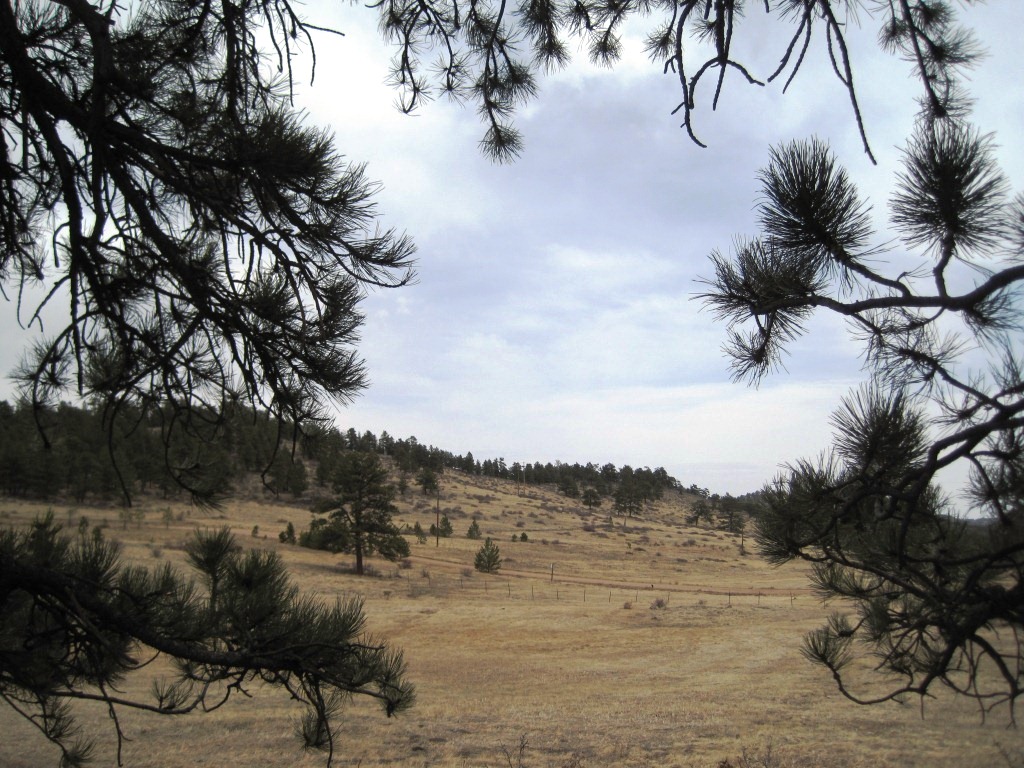
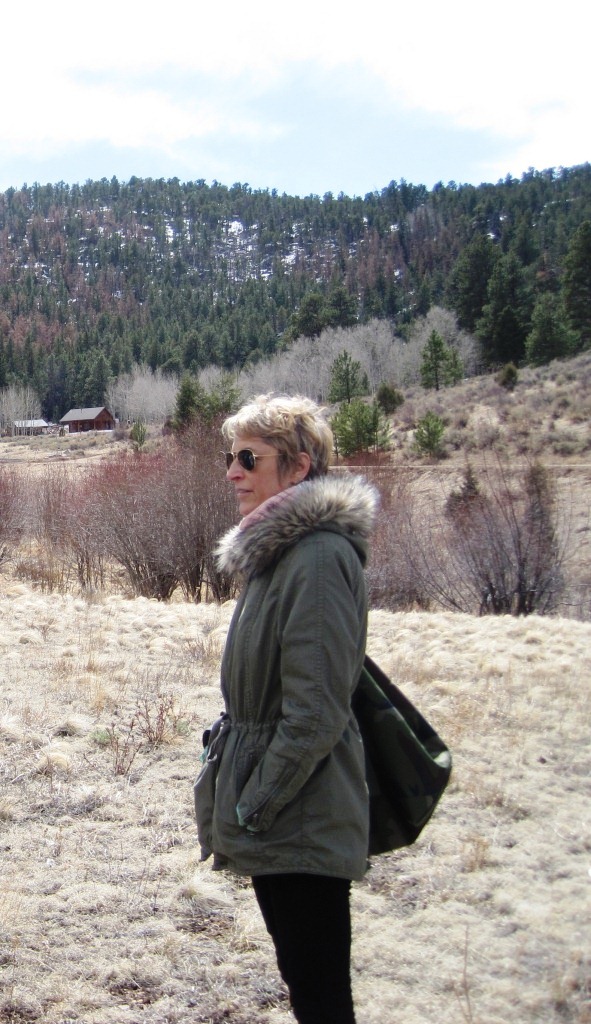
After we wrote our letter, Susan sent us aimlessly wandering. This is a particular mindfulness practice, “exploration without destination,” movement without intention or judgement, a walking meditation. As I walked, I was drawn towards my favorite trees at SMC–two pine trees, one straight and one bent, but so close together they almost look like a single tree, growing mostly by themselves in the corner of a meadow. I stood between them, looking out at the land, and the wind blew, a cool gust that filled my lungs, pushing against and past and through my body like a physical thing. In that moment, a voice inside me whispered, “you can let go.” I made a deal with the wind, with the pines, with that sacred land and vast open sky that I would.

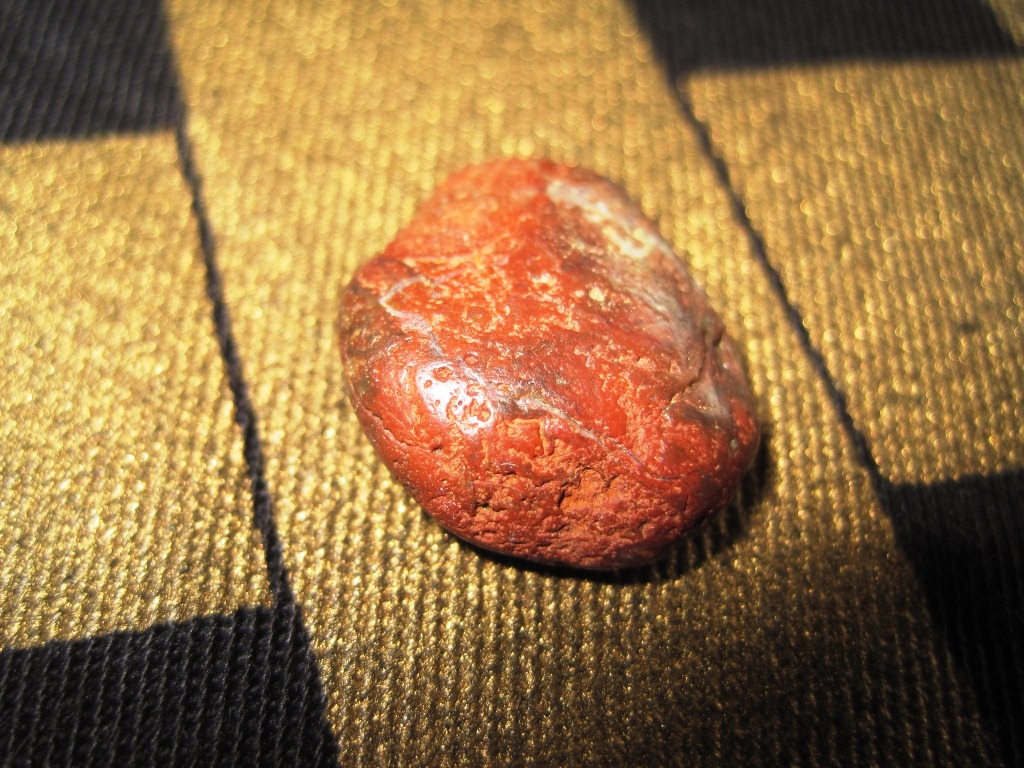
Looking in my wallet, as I’d packed to come to SMC, I’d found a rock, picked up, collected and kept from our trip to the beach this past summer, carried with me ever since. It was a joke from Eric. I’d been finding so many heart shaped rocks on the beach, that one day he came home from a walk with the dogs and said, with a crooked grin on his face, “I found you a heart rock.” What he put in my hand was deep red and meaty, shaped like an organ, rippled like muscle, a tiny petrified heart.

After the weekend at SMC, I was ready to let it go, this closed, hard heart. I couldn’t drop it just anywhere, throw it away. It needed to go somewhere I could trust to take it, needed to give it away and have it accepted with kindness, to have it held it for me, to place it somewhere safe, to allow for a letting go. On that final morning, I walked back to “my” trees. I hugged the one that stands straight and tall, (I confess, I first looked to be sure no one was watching), this spot where I’d made a deal with the wind, where I could return my closed, hard heart to the earth, let it rest in that place.

It would release me, I would release it. I could move on, go home. I could leave the self there who hurts, who is afraid. She could stay there safe, comforted, and I would leave, cracked open, soft and tender and raw.

There was a spot in the bent tree where a branch had been cut off. It looked like an eye. I took the heart rock from my pocket, smooth and warm, and shoved it as far as I could into the center of the eye. Then I stood between the trees, in the same spot where the wind had touched me the day before, and looking out over the land, I let go.

I opened my heart.

I tell you this
to break your heart,
by which I mean only
that it break open and never close again
to the rest of the world.
~Mary Oliver