

I first discovered Lisa Field-Elliot’s blog and photography by way of Susannah Conway. I was instantly drawn in by her aesthetic, so beautiful, dreamy and deep, soft around the sharpest edges, elegant but raw. Reading her blog posts is like being visited by an oracle in a dream or going on a vision quest, a healing ritual, magic and medicine, a gentle and complete surrender to wisdom and grace delivered with such compassion.
Her vision is poetic but brave, facing the truth directly, going deep. She is “a witness, narrator, liaison, photographer, interpreter, whittler, language-miner, image facilitator, poet, and ally.” My regard for her only grew knowing she had a dog, loved and lost him, and then courageously entered into that relationship again with another beast destined to break her heart. I am so happy to share her perspective on self-compassion with you today.
 1. What does self-compassion mean, what is it? How would you describe or define it?
I believe self-compassion to mean truly honoring, and allowing for, our own suffering. To be with the hurts, the uncomfortable, the longings and the hungers, and to offer value and substance to these experiences. More than that, to go further and to respond, in kind, to what the self is really wanting and needing. To ask, and then to answer, without any payment in the form of shame or greed, guilt or assumed indulgence.
I believe this to mean allowing for the unpredictable nature of being human. It means being kind. It means allowing for plans to change, for the mountains to call, and for rest and retreat to be taken freely. It means beholding beauty as our birthright and our longings as legitimate. It means loving the self as much, or more, than the other.
 2. How did you learn self-compassion? Did you have a teacher, a guide, a path, a resource, a book, a moment of clarity or specific experience?
For me, the embodiment of self-compassion has come through a lifetime of self-discovery, and validation from those that have come before. I was born porous and open, and with that constitution, came a sensitivity to simply living. When we struggle inside, we seek to know the way through. Along the way, I found the paths of yoga and Buddhism provided vivid maps and frameworks for what it means to be compassionate and to value self-care and inquiry. Teachers have shown up throughout my life in women’s groups and retreats, spiritual circles and in friendships. Poets like Kahil Gibran, Mary Oliver, Hafiz, Rumi and Ghalib have lit my path. Writers and healers like Tara Brach, Elizabeth Lesser, Pema Chödrön, and Martha Beck have made tremendous offerings toward my understanding, and valuing, of loving care for myself.
Mothering has, perhaps, had the greatest influence on my experience of self-compassion. The sheer abundance of responsibility implicit in the raising of children has brought me to my knees over and over again, pushed me to the edge of understanding my capacity to love and to lead, and simultaneously depleted and overflowed my reserves again and again. I had to learn to trust and care for myself, to model what it means to listen to my body, my heart, my instinct. Out of absolute necessity, mothering begs for self-compassion.
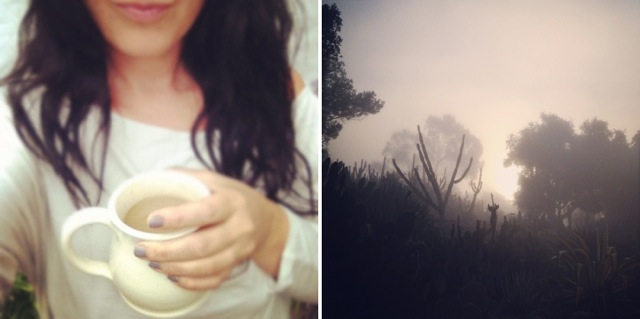 3. How do you practice self-compassion, what does that experience look like for you?
For me, self-compassion is an underlying theme in all that I do. I have had to learn to listen to my body’s requests for each day–for rest, for movement, for nutrition. Likewise, I have had to be tuned into my need for stimulus and inspiration, balanced with my need for silence and retreat, for nature and nurturing.

So, what does this look like? In short, it looks like flexibility. It looks like being willing to change plans if something doesn’t feel right. It looks like saying no to an opportunity if my body responds with a knot in my gut. It looks like taking the time to feed myself well, to exercise, to stare at walls when I am overwhelmed. It looks like PERMISSION to respond to whatever comes up inside of me, in the most gentle, kind, and loving way possible–as I would for my children, or anyone else that I love.
 4. What do you still need to learn, to know, to understand? What is missing from your practice of self-compassion, what do you still struggle with?
I still struggle with the question of whether or not I am giving enough of myself to the world. I struggle with the days that my body clearly begs for respite, and I know that there will be disappointment on the other side of my choice to care for myself, and I must choose carefully what will create the greatest cost and benefit. I also struggle with adapting my longings for a quiet, rhythmic existence to the anything-but existence of life in a family with active teenagers and a puppy! Sometimes, being compassionate is simply listening and acknowledging, even if the situation cannot be changed. It isn’t always doing, but rather allowing for what comes up–and this is what I am still learning.
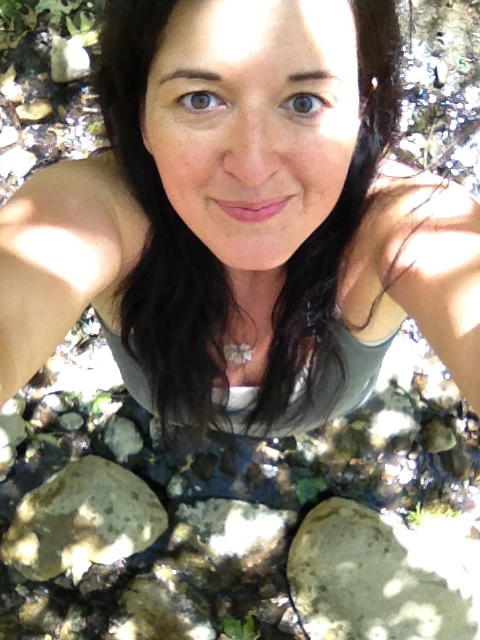 I am so grateful to Lisa, for these responses, but also for being an example of feminine power, a particular blend of gentleness and courage, wisdom and compassion, soft but strong. To find out more about Lisa, to connect with her:
- Visit her website
- Follow her on Twitter
- Follow her on Facebook
- Delight in her beautiful boards on Pinterest
- View her luscious images on Instagram and her website
Next on Self-Compassion Saturday: Marianne Elliott.
P.S. If you didn’t see the first post in this series, you might want to read Self-Compassion Saturday: The Beginning. Or make your way through all the posts tagged Self-Compassion Saturday.



 Open Space Practice, (AKA: A Thousand Shades of Gray)