Tag Archives: Practice

Thoughts on Practice

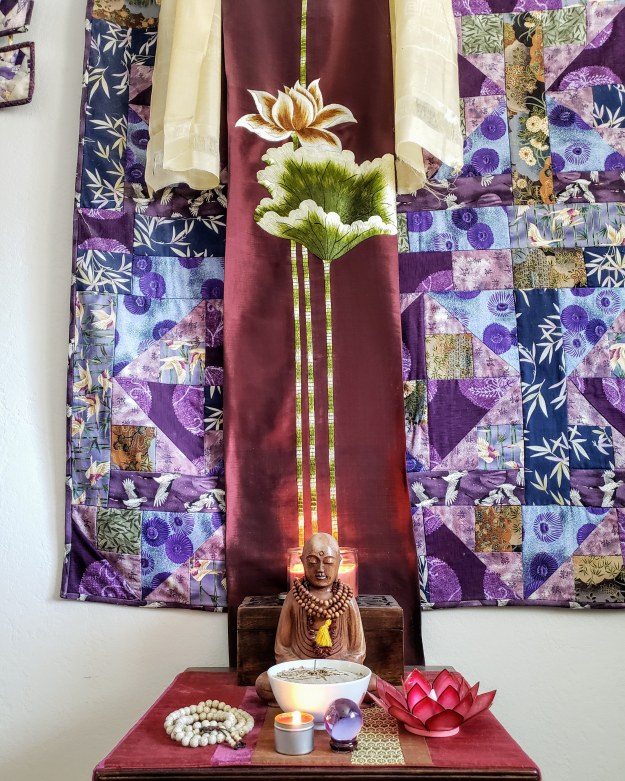
My meditation shrine

My meditation shrine

I realized the other day that when cultivating a new practice, an essential thing to remember is to not make it a big deal. What I mean is sometimes your rules and restrictions about what you think your practice is supposed to be are based on what you know about long time, serious practitioners, and a whole set of internalized “shoulds.” In this way, rather than easing into things, you make it a big deal and set the bar too high.

For example, with meditation, you might feel like you have to have the “right” meditation tools (cushions, shrine, timers, etc.) and that at the start you should be meditating for long sessions. These intentions in the beginning end up becoming obstacles rather than support. You wait until you can afford the “right” tools, spend hours researching and talking about the practice and the tools but not actually doing anything, or you sit for one session of half an hour one day and immediately the next day are too busy and can’t manage sitting for that long so you skip it altogether.

I could write a whole book about cultivating a practice. In fact, I probably will. What I’m thinking about today in particular is how we get in our own way when we want to start, turn it into a big deal that ends up tanking the whole thing, AND how after we establish our practice, there is a natural shift to taking it seriously, which can look a whole lot like “making it a big deal.” What I mean is while it’s good in the beginning to not worry about the specifics or put too much pressure on getting it “right,” once you are committed, it’s good to honor what you are doing in a different way.

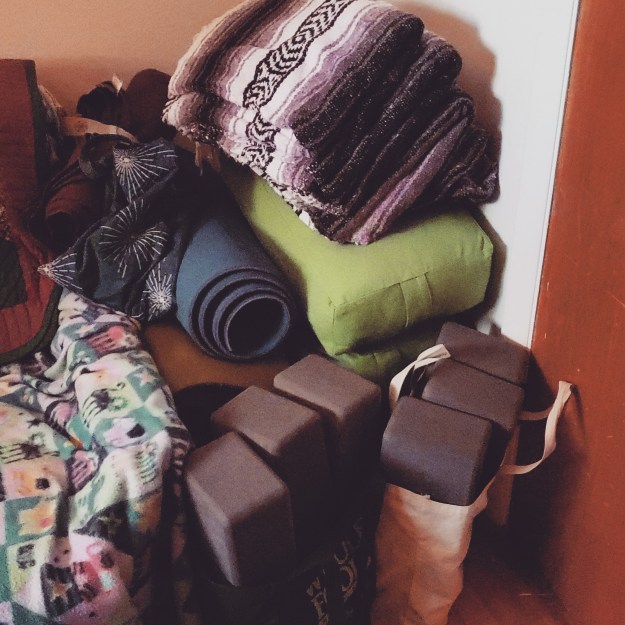
Once a practice is in place and you’ve found your own reasons to continue, taking it seriously makes a difference. For example, when you first begin a yoga asana practice, you can do so without a mat or props or any sort of in-person interaction with a class or a teacher. There are plenty of really good free videos online, and a belt from a bathrobe makes a perfectly good yoga strap. And yet, if you’ve been practicing regularly and intend to continue, it makes sense to invest in some props and maybe even find a community in the form of a studio or specific teacher, to research the different kinds of yoga asana and regularly practice the one that resonates most with you.

So to start, don’t make it a big deal. Then when it becomes a big deal, honor it as such. And know that no matter what, it is your practice and what “honoring” it looks like is specific to you, your experience and intentions and goals — and no one else can tell you what that is. Only you know, and you can trust yourself.
Accessible vs. Easy

I watched a Great Big Story video last night, Posing for Inner Peace: The Yogi Practicing Body Acceptance, in which Dana Falsetti talks about her yoga practice. There was one thing she said about teaching that stayed with me because it bothered me. It’s not what she said exactly or what I think she meant because I’ve followed her for a long time and know her backstory and I don’t think she meant to say anything negative — yet it might be easily interpreted that way.

In the video, she said, “I travel all over the world teaching body positive workshops. So, I don’t necessarily teach in a way that is about modifying or making the practice easier for anybody based on age or size or anything like that. It’s more about teaching in a way that makes everyone feel really included and really comfortable.” I think she meant to say that her focus is on inclusion and comfort, making her students feel a certain way rather than focusing on the mechanics of the practice. I also infer that she wants to be sure that one doesn’t see the fat (or illness, injury, or age) on her body or those of her students and make assumptions about their ability to practice, about how strong or flexible or capable they might be. Maybe she also wants her students to retain authority over their own practice, their own experience, and believes that taking the focus off modifications, variations, and props supports that.

And yet, as a teacher who DOES focus on the mechanics of the practice, on helping students find the appropriate modifications, the best variations, and the most helpful props, what she said bothers me. It seems to imply (even though I’m pretty sure that’s not what she meant) that “easy” is bad, that modifications don’t need to be taught, that student’s don’t need the teacher’s help in finding what is comfortable, or that making modifications or choosing variations or using props mean your practice isn’t challenging, that by doing any of these things you are taking the easy way out, (see Allison Ray Jeraci’s Instagram account to see one example of how “easy” poses are with modifications and props).

“So, I don’t necessarily teach in a way that is about modifying or making the practice easier for anybody based on age or size or anything like that.” It isn’t about making someone’s practice “easier,” but rather making yoga asana practice accessible. And maybe the statement only bothers me because I’m an accessibility geek when it comes to yoga asana practice, about people moving their bodies in general. Movement matters, for everyone, and as someone who facilitates movement experiences, I feel like it’s my responsibility and my JOY to figure out ways my students can move in ways that feel good, that allow them to meet their goals. When I teach, I want to help them find those ways, to provide them with whatever support, options, and tools I can.

Modifications, variations, and props don’t make yoga asana practice “easier,” they make it more accessible. They facilitate a student’s experience, allow them to meet their body, heart and mind (physical and energetic) exactly where it is on any given day. It cultivates a deep awareness of what they need and what they have to give. It allows them to meet themselves and others from a place of stability and compassion. It allows them to let go of external and internalized expectations about what yoga asana practice or the shape of their body is “supposed to” look like.

Practice can allow a state of being that Tara Brach calls radical compassion. One of the ways she talks about practicing this is R.A.I.N., which stands for:

  • Recognize what’s happening
  • Allow life to be just as it is
  • Investigate with a gentle, curious attention
  • Nurture with loving presence

And anyone who’s ever attempted that, on the mat or off, knows that it’s anything but easy.