

If you are like me, kind and gentle reader, there are certain moments or events, certain people and experiences that have changed you, transformed you in the best possible ways. And if you are like me you carry the memory, the love and gratitude for those times and people tucked inside your heart forever, the most precious of things held close.
One of the people I treasure in this way is Andrea Scher. I wrote her an open love letter exactly one year ago, posted Saturday the 16th of June in 2012. That post even included the above picture! I didn’t know either of these things until I started writing this post today. This is the exact kind of magic that Andrea attracts, generates, inspires.
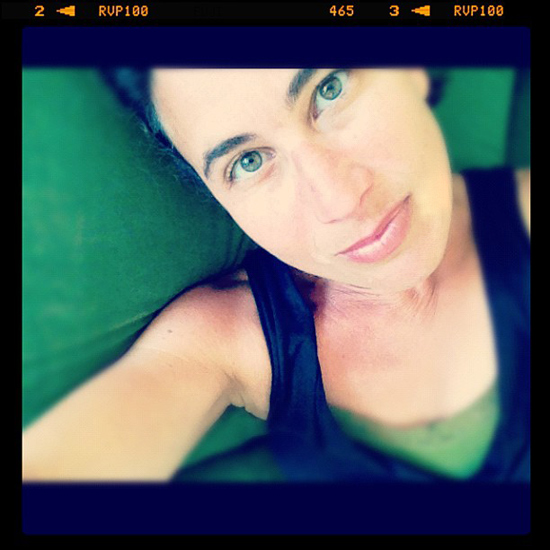
self-portrait by andrea scher
I’ve lost tract of the number of classes I’ve taken with Andrea, but each one of them has been that particular kind of magic. The first Mondo Beyondo session I did, my first class with her, happened at the same time I started this blog, inspired me to finally start. That experience came full circle when Andrea invited me to be her teaching assistant for the most recent session of Mondo Beyondo. She has always been so incredibly generous, and her wise and compassionate coaching is helping me to create some of my own future ecourses, and beyond that to create a life that I am utterly in love with living. I am who I am right now in large part because of her support and encouragement. In the open love letter I wrote to her, I said,
Andrea Scher has been the sun at the center of a universe of amazement and goodness, the shiny middle that all the other bright and precious things orbit around.
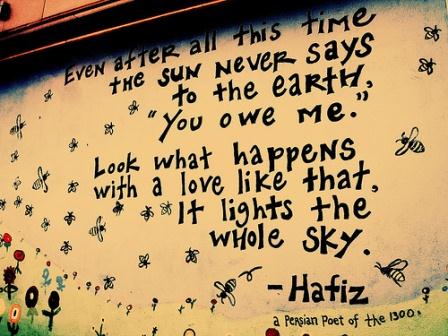
Photo by Mara
I found Andrea Scher’s original blog, Superhero Journal, at a time when I was so brokenhearted, such a mess, so stuck, so tired. I didn’t know how to keep going, where to even start. I was searching, my view clouded by grief, knew that I had abandoned myself and my dreams, but didn’t know how to find my way back.
The person I am today: writer, artist, warrior, brave, open-hearted, funny, strong, joyful, sane, is possible in part because of Andrea Scher. She invited me to expand my idea of what was possible. She encouraged me, was kind and honest. She was constantly admitting the things that are hard and messy, while still pointing out what’s beautiful and precious. She reminds me of this quote from Muriel Rukeyser, “What would happen if one woman told the truth about her life? The world would split open.” Split open, and through the cracks, the light would get in (or maybe get out?).
I’m so happy to be sharing Andrea’s answers to my four questions today.

andrea scher, taken by laurie wagner
1. What does self-compassion mean, what is it? How would you describe or define it?
I’ve heard that compassion means “to suffer with.” What a gift, right? To not have to suffer alone, to allow somebody’s suffering but sit right down next to them and maybe even hold their hand.
Self-compassion is learning to suffer with ourselves. It’s extending the same kind of kindness we would to a dear friend. It’s learning to sit with ourselves and allow our suffering, to hold our own hand.
Practically, this means that we can acknowledge when we are suffering and not push it away, or tell ourselves it’s not that bad, or you don’t deserve to complain… These are some of the things I used to tell myself, echoes of what some important grownups in my life affirmed. For me, self-compassion is allowing myself to feel my feelings (even if they make others uncomfortable) and letting them move through me. (They always do)
Then it’s about using a kind voice to ask good questions: What would help right now? What do you need most? or What feels hardest?
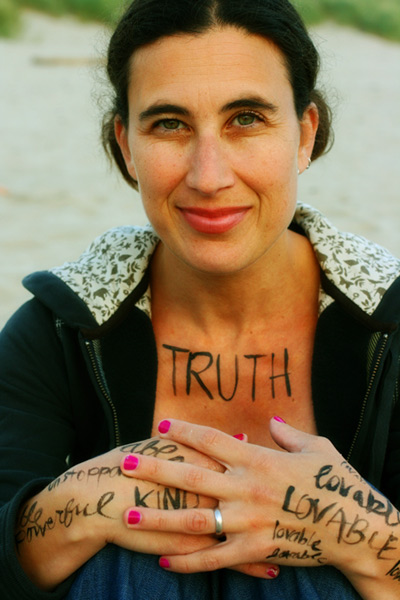
image by jen gray
2. How did you learn self-compassion? Did you have a teacher, a guide, a path, a resource, a book, a moment of clarity or specific experience?
Mostly, I learned from going through hard things and NOT being particularly compassionate with myself. This kept me stuck so much longer than necessary.
I cultivated a kind inner voice when I became a parent. Once I became a mother I noticed what my own self-talk sounded like – You idiot! You’re always messing things up! This was not a voice I wanted to pass on to my kids! So I practiced speaking really gently to my son. Over time it became a habit and I started addressing myself this way too. What a beautiful side effect of practicing non-harm and gentleness.
3. How do you practice self-compassion, what does that experience look like for you?
Recently, I learned a beautiful exercise from Kristin Neff. When you are having a rough moment, try this: Put your hand on your heart, close your eyes and say, “This is suffering.” Then take a breath and say it again.
It’s such a simple practice, but really profound.
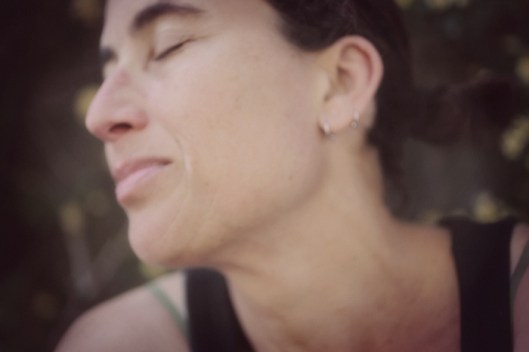
self portrait by andrea, eyes closed
4. What do you still need to learn, to know, to understand? What is missing from your practice of self-compassion, what do you still struggle with?
This is going to sound very unscientific, but I must have carved a deep neuro-pathway in my brain that goes like this: Someone gets annoyed or angry with me. I completely FREAK OUT and do whatever I can to make it better (including betraying myself and my truth in the process) and if I don’t get a response from them or they are still angry, I believe that I must be a horrible, broken and unlovable person who doesn’t deserve to be alive.
I know. Totally dramatic, right?
I suppose I am making progress because I have a consciousness around this string of thoughts. It’s still very painful though… Next time, I’m going to put my hand on my heart and simply say: This is suffering.
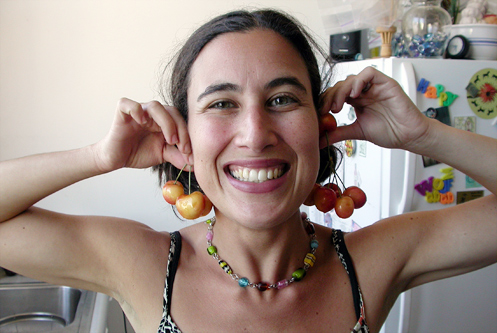
You can see why I adore her so much, right? Since she sent me her answers, many times I have closed my eyes and put my hand over my heart. In that moment, imagining Andrea’s kindness, her smile, contemplating my love and gratitude for her is a path towards loving myself, her light leads the way. To find out more about Andrea, to connect with her:
- Visit her website, Superhero Life
- Read her blog, (no, seriously, you really should be reading her blog)
- Take one of her ecourses or workshops, (Start a Foolish Project is her latest creation and I predict it will be amazing!)
- Follow her on Twitter
- Like her on Facebook
- See her beautiful photographs on Flicker
- View her Instagram photographs
- Sign up for her newsletter
- Check out her Etsy store, where she sells a limited number of her amazing Superhero necklaces
Next on Self-Compassion Saturday: Laurie Wagner.
P.S. If you didn’t see the first post in this series, you might want to read Self-Compassion Saturday: The Beginning.


 Open Space Practice, (AKA: A Thousand Shades of Gray)